



Attractions information

Ayutthaya Long-tail Boat

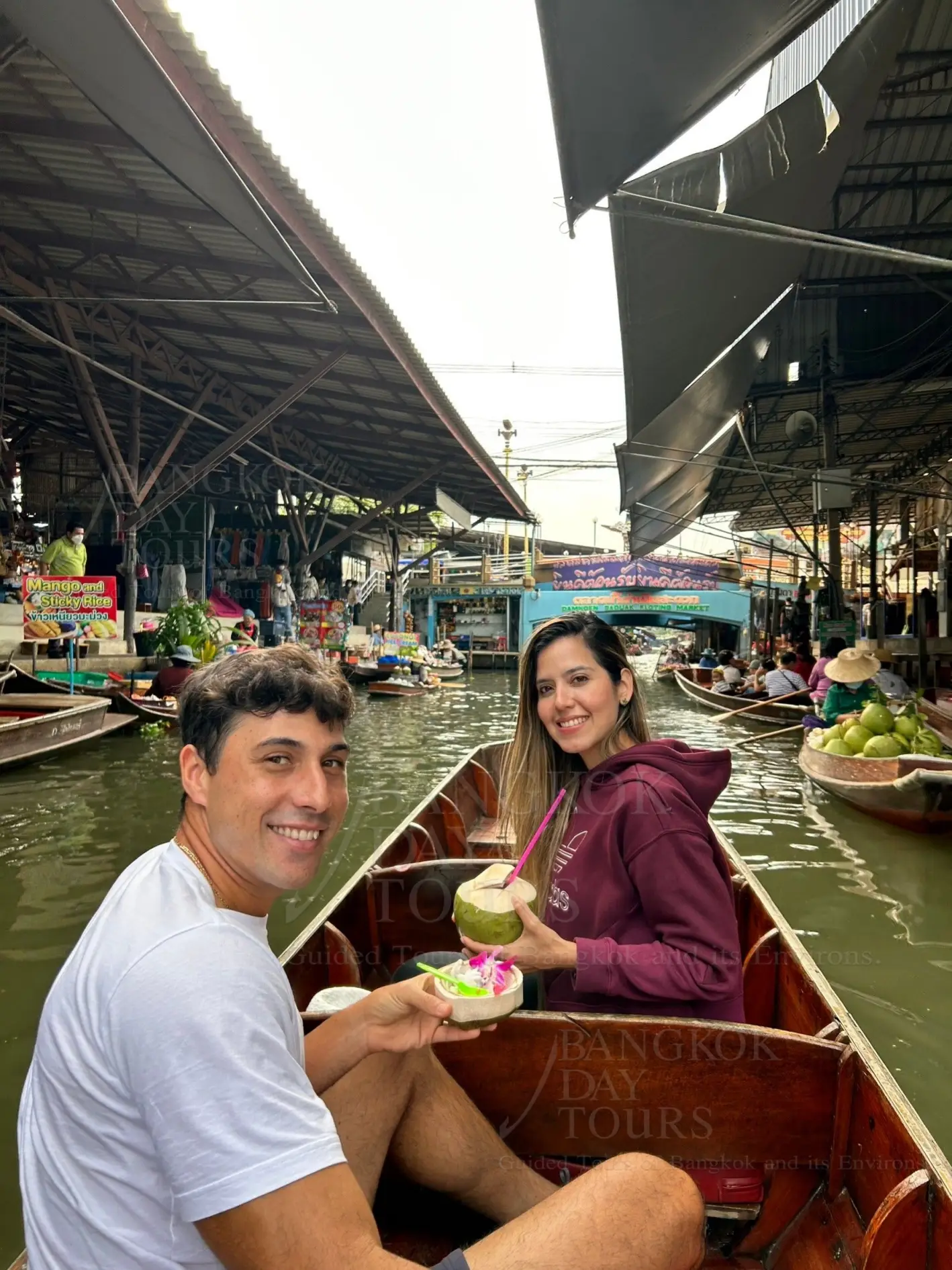
Ayutthaya is an island encircled by a confluence of three rivers, the Chao Phraya, Lopburi and Pa Sak and it makes sense to take a local long-tail boat so you can get a different perspective of the city.

Many of the most interesting temples are only accessible from the river so you'll enjoy this.

The Chao Phraya, Lopburi and Pa Sak rivers are teeming with aquatic life and as you cruise you are likely to see a variety of snakes, monitor lizards and plenty of fish in the river. Surprisingly, you'll also see lots of children swimming and mothers doing their laundry on the steps of their houses.

A 17th century Dutch merchant described Ayutthaya as 'a city standing on a small island of the Chao Phraya River. Within the city walls, there are long, straight and wide roads. Canals have been dug from the river into the city, facilitating transportation.

Apart from the main thoroughfares, there are also a multitude of small canals, lanes and walkways. During the high water season, it is possible to paddle boats everywhere, even up to the house steps. Ayutthaya is a riverside city which has been carefully planned. It is truely a beautiful city'.
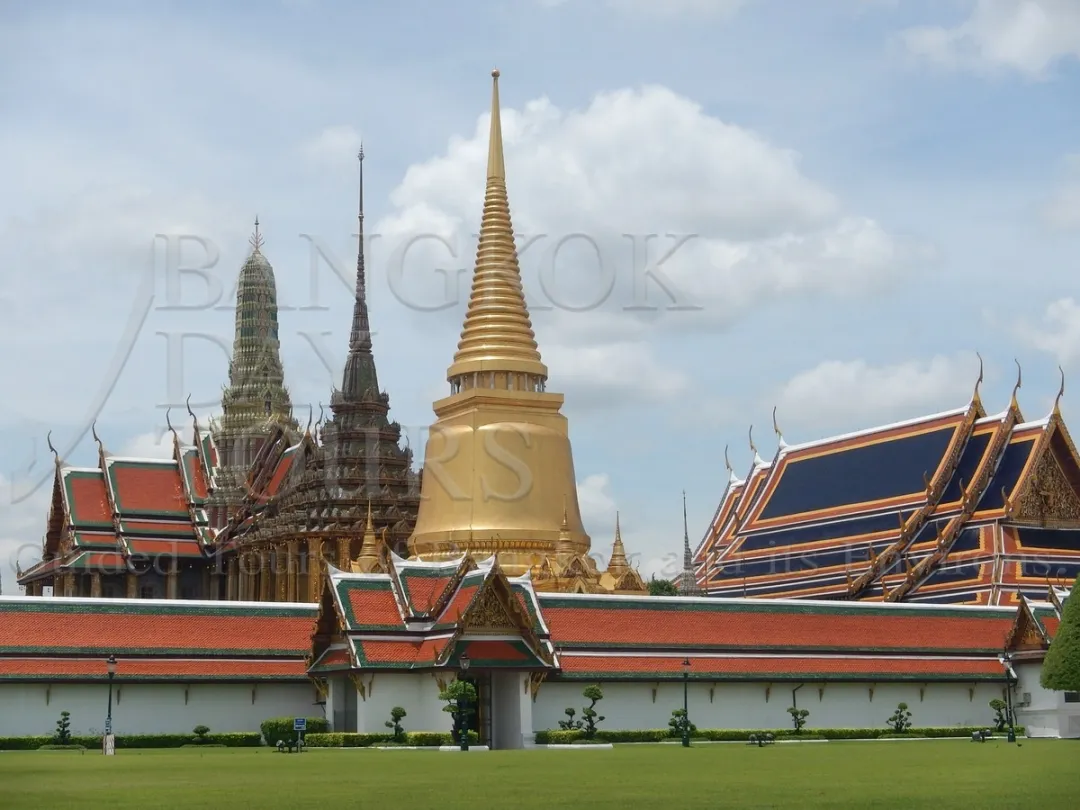
Attractions information

Ayutthaya Sacred City

Phra Nakhon Si Ayutthaya "The Sacred City of Ayutthaya" was founded in 1351 and reached its apex in the 16th century. It is an island embraced by three rivers, the Chao Phraya, Lopburi and Pa Sak.

In the Golden Age which lasted 417 years, Ayutthaya was the historic capital of Thailand.
The territory of the Kingdom of Ayutthaya extended far beyond present-day Laos, Cambodia, and Myanmar. During the 17th century, foreign visitors, traders and diplomats alike, claimed Ayutthaya to be the most illustrious and glittering city that they had ever visited. That ended forever in 1767 when it was conquered by the Burmese and completely destroyed.

Nowadays, visitors to Ayutthaya, which is only 86 kilometers north of Bangkok, can marvel at its grandeur reflected through numerous magnificent structures and ruins concentrated in and around the city island. The temple compounds are still awe-inspiring even in disrepair and a visit here is memorable and a good beginning for those drawn to the relics of history.

The architecture of Ayutthaya is a fascinating mix of Khmer, or ancient Cambodian style, and early Sukhothai style.

Most importantly, Phra Nakhon Si Ayutthaya Historical Park, an extensive historical site in the heart of Ayutthaya city, is a UNESCO World Heritage Site.
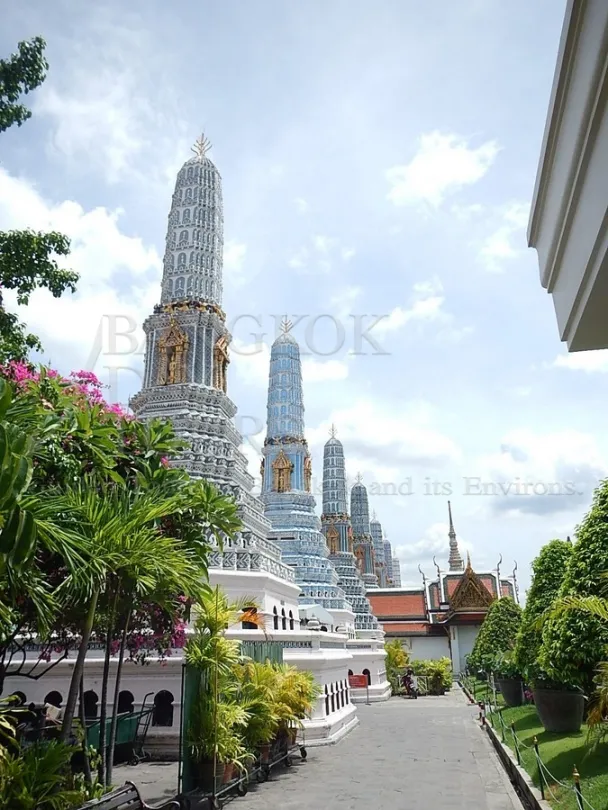
Attractions information

Ayutthaya Sacred City

Phra Nakhon Si Ayutthaya "The Sacred City of Ayutthaya" was founded in 1351 and reached its apex in the 16th century. It is an island embraced by three rivers, the Chao Phraya, Lopburi and Pa Sak.

In the Golden Age which lasted 417 years, Ayutthaya was the historic capital of Thailand.
The territory of the Kingdom of Ayutthaya extended far beyond present-day Laos, Cambodia, and Myanmar. During the 17th century, foreign visitors, traders and diplomats alike, claimed Ayutthaya to be the most illustrious and glittering city that they had ever visited. That ended forever in 1767 when it was conquered by the Burmese and completely destroyed.

Nowadays, visitors to Ayutthaya, which is only 86 kilometers north of Bangkok, can marvel at its grandeur reflected through numerous magnificent structures and ruins concentrated in and around the city island. The temple compounds are still awe-inspiring even in disrepair and a visit here is memorable and a good beginning for those drawn to the relics of history.

The architecture of Ayutthaya is a fascinating mix of Khmer, or ancient Cambodian style, and early Sukhothai style.

Most importantly, Phra Nakhon Si Ayutthaya Historical Park, an extensive historical site in the heart of Ayutthaya city, is a UNESCO World Heritage Site.

Attractions information

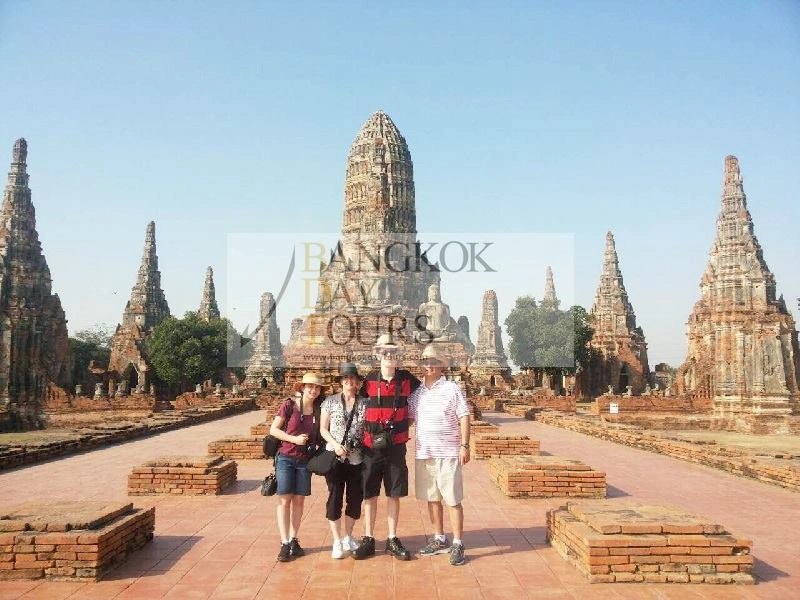
Wat Mahathat Ayutthaya

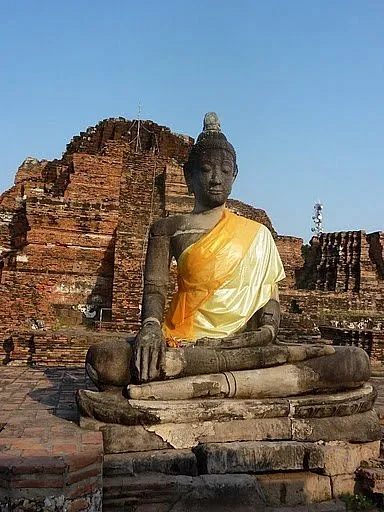
Wat Mahathat was built in the early days of Ayutthaya in the late 14th century by King Borommaracha I.

The story goes that the king had a revelation, and relics of the Buddha then suddenly appeared. The temple was built to house the relics.

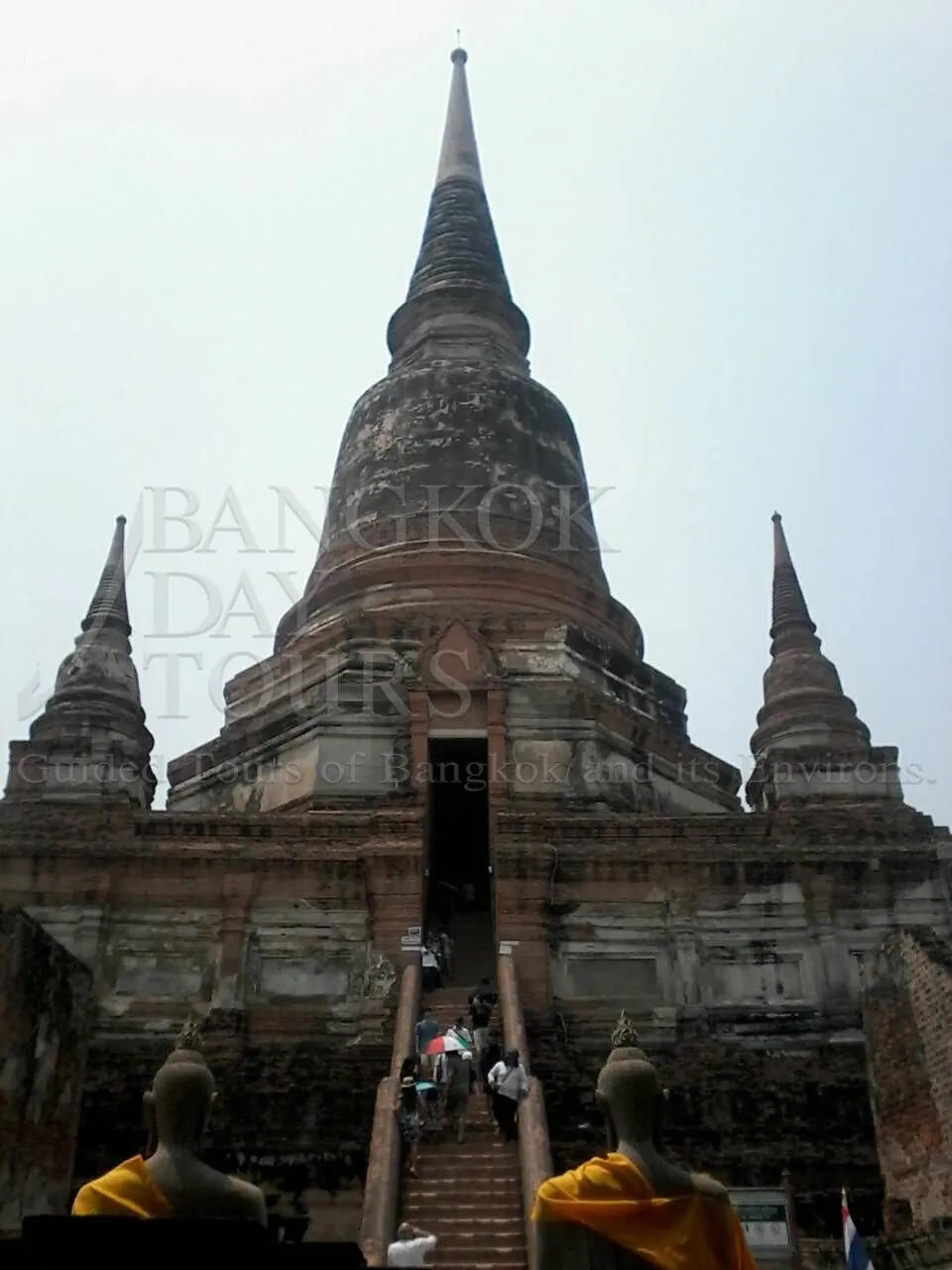
Wat Mahathat Ayutthaya was built in the early period in 1374. The main stupa is Pang shape made of laterite but in the later periods was resored with brick.

The construction of Wat Mahathat was begun during the reign of King Borommarachathirat I in 1374 A.D. but was completed during the reign of King Ramesuan (1388-1395 A.D.) When King Songtham (1610-1628 A.D.) was in power the main prang (Khmerstyle tower) collapsed. The restoration work on the prang was probably completed in the reign of King Prasatthong (1630-1655 A.D.) During the restoration the height of the prang was considerably increased.

Wat Mahathat was restored once again during the reign of King Borommakot (1732-1758 A.D.) when four porticos of the main prang were added. In 1767 A.D. when Ayutthaya was sacked the wat was burnt and has since then been in ruins.

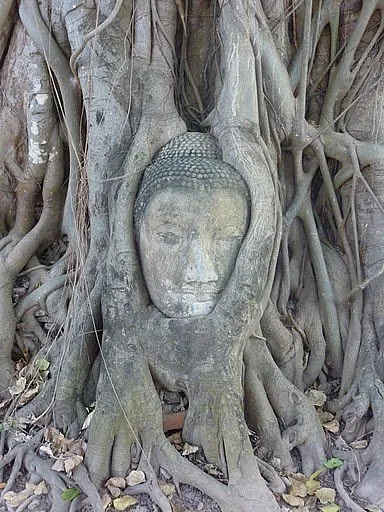
It is most famous for the Buddha head trapped in the Bodhi Tree.

Ayutthaya Temples and Canals Tour  (Code:1101)
Pick a day and people

THB  9,000.00

THB  10,000.00

THB  12,000.00

THB  15,100.00

THB  16,900.00

THB  19,100.00

THB  20,700.00

THB  23,700.00

THB  26,600.00

THB  33,200.00

THB  36,470.00

THB  37,700.00

This tour is not designed for cruise ship passengers. Exclusive cruise ship tours are available from Klong Toey Port and Laem Chabang Port.

Phra Nakhon Si Ayutthaya, the former capital of Siam, is now a World Heritage Site. After exploring some of the temples in the ancient city, we'll take a longtail boat around the island to see places that are only accessible from the water.

Do you want your tailor-made tour?

A tailor-made tour is the best kind of independent travel itinerary, designed and arranged just for you and your needs.
All events and activities are part of your very personal, privately guided tour.
Just ask us and we will be happy to make your tour an unforgettable experience. We have been doing this for 25 years and the quality of tailor made tours has never changed.

Request a Custom Tour

Why is a private tour a better choice?

With a private tour, you have the freedom to choose what you want to do and when you want to do it. There is much more room for flexibility and changes to your itinerary at every step of the way because you don't have to consider the needs of other travelers. The flexibility and freedom to make the most of your time is the reason why so many people choose to take a private tour rather than a group tour.

Private Tours vs Join Tours:
Bangkok Day Tours does not run join tours. All our tours are private tours, meaning that the vehicle is for the exclusive use of your group throughout the duration of your tour. This allows you to set your own pace and to move along when you have seen enough. No waiting for the stragglers! The only exception to the ANZAC Day Tours which are run on a join basis in April each year.

Tour Programme

08:00 - Pick up from your hotel

We'll pick you up from your hotel. Please wait in the lobby.

09:00 - Long tail Boat Trip

The first stop is an invigorating long-tail boat ride around the island of Ayutthaya, where you can enjoy the scenic views.Read More >

11:30 - Wat Lokayasutharam

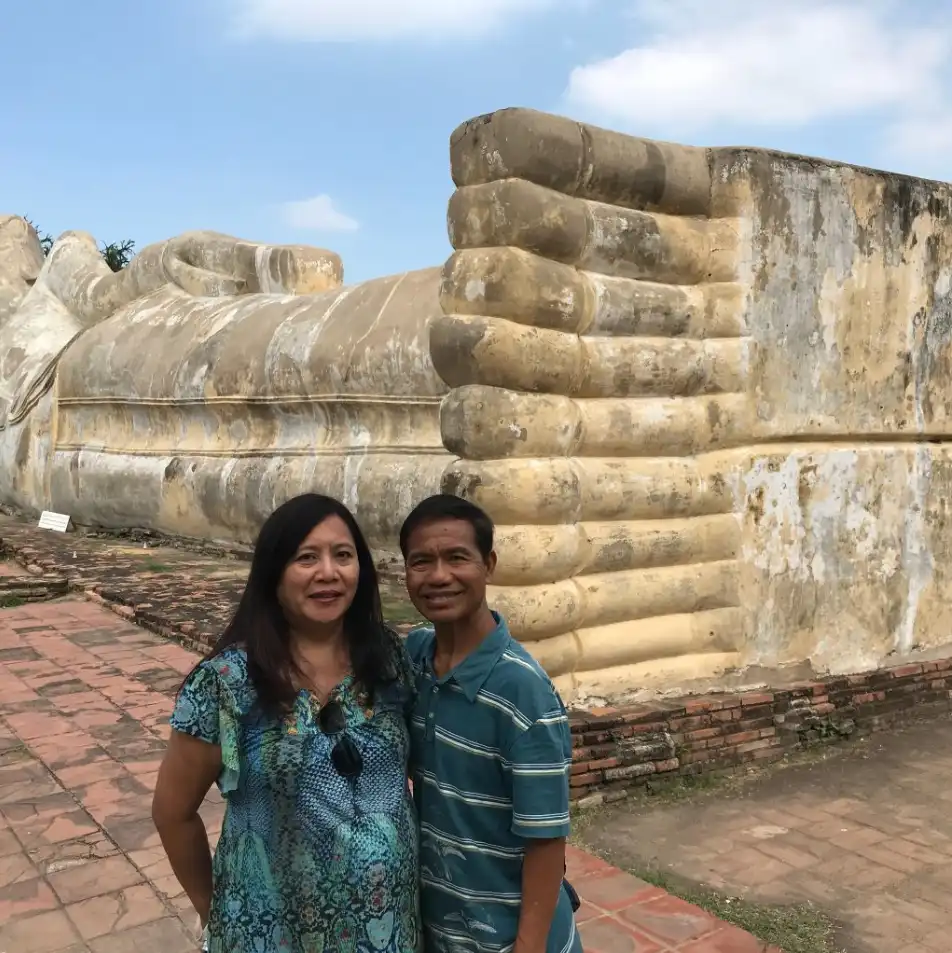
Before lunch, we'll stop at Wat Lokayasutharam so you can explore the site. This temple is home to the largest reclining Buddha image on the island of Ayutthaya. It is enshrined in an outdoor brick building that is 42 meters long and 8 meters high.Read More >

12:30 - Ayutthaya's Temples

We spent most of the afternoon exploring ancient temples such as the famous Wat Mahathat. Each temple has its own unique characteristics.Read More >

13:30 - Wat Phra Si Sanphet

Wat Phra Si Sanphet is the most important temple in Ayutthaya. It was a royal temple housing a 16-metre-high gilded Buddha image. The temple's three distinctive stupas make it one of Ayutthaya's most iconic sites.Read More >

14:30 - Return to Bangkok

Relax as your driver returns you to Bangkok.

16:00 - Arrive back at you hotel

You can expect to be back at your hotel around 4:00pm. depending on the traffic.
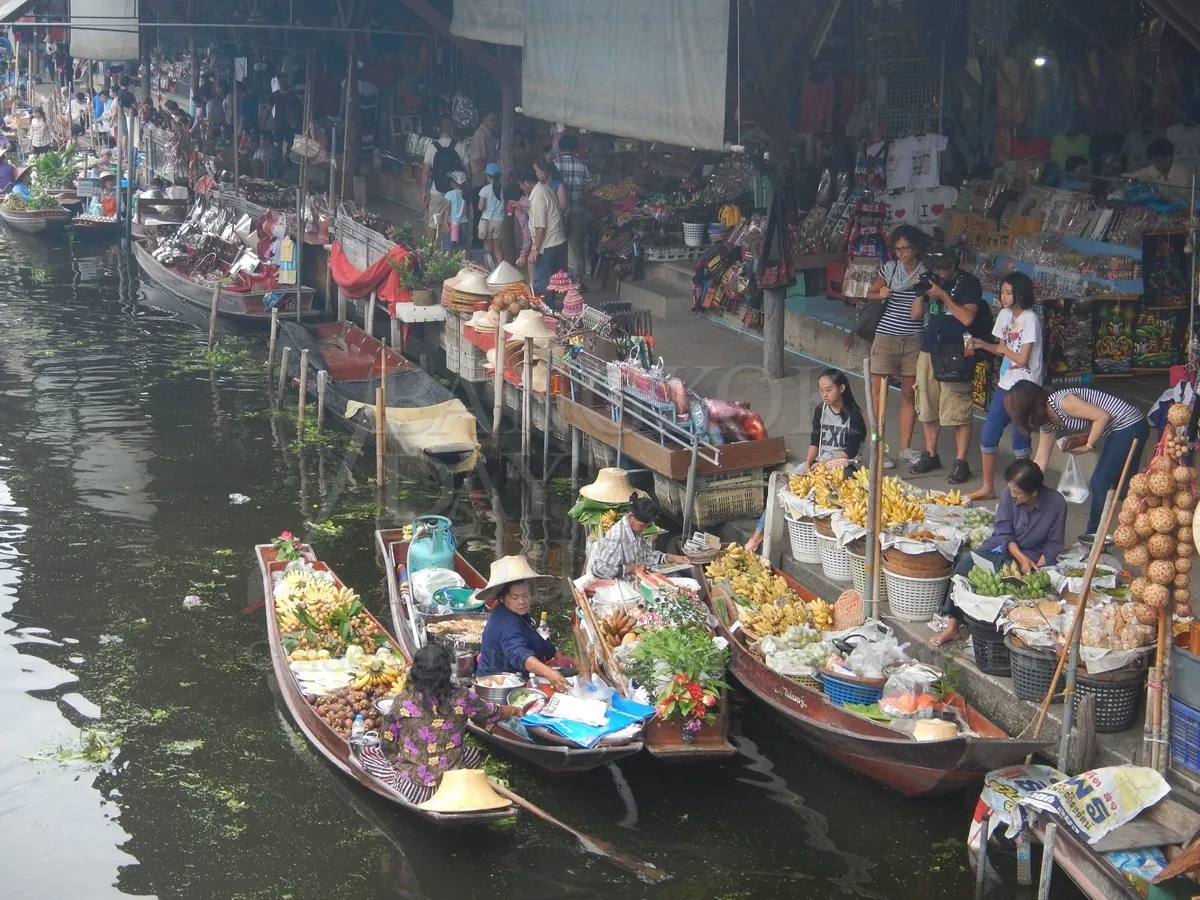
Testimonials

Attractions information

Wat Arun Temple of Dawn

The Temple of Dawn or Wat Arun is named after Aruna, the Indian God of Dawn. It's one of Bangkok's best known and most photographed landmarks. It is best viewed from the river at dusk with the sun setting behind.

This ancient temple was originally known by locals as Wat Makok or The Olive Temple.

The temple was built in the days of Thailand's ancient capital of Ayutthaya and its outstanding feature is its central Khmer-style prang reaching a height of some 86 metres. The corners are surrounded by 4 smaller satellite prangs which are decorated by seashells and bits of porcelain that had previously been used as ballast by boats coming to Bangkok from China.

Around the base of the prangs are various figures of ancient Chinese soldiers and animals. Over the second terrace are four statues of the Hindu god Indra riding on Erawan.

This Buddhist temple is an architectural representation of Mount Meru, the center of the world in Buddhist cosmology.

In the mythology of Tibetan Buddhism, Mount Meru is a place located somewhere beyond the physical plane of reality that simultaneously represents the center of the universe and the single-pointedness of mind sought by adepts. The four-corner prang of Wat Arun, which house images of the guardian gods of the four directions, reinforces this mystical symbolism.

Attractions information

Bangkok Noi Canals

Bangkok has often been called the Venice of East, but over time many of the canals in the city have been filled in to make roads, so it is nice that this part of the city has retained the charm of living along the banks of serene canals. Take a long-tail boat and explore the myriad waterways.

Bangkok Noi Canal flows in a horseshoe shape through the old Bangkok Noi community in the Thonburi area.

The community was established in the Ayutthaya Period and King Chai Racha Dhiraj (1534-1546) commanded the excavation of a waterway from Bangkok Noi Canal to Bangkok Yai Canal as a shortcut to facilitate transport and communications.

Along both banks of the Bangkok Noi Canal, visitors see places of cultural and historical significance. On a boat trip you can pass the Thonburi railway station and the Royal Barges Museum. The boat trip also takes in several major temples and traditional Thai houses with carved designs.

Although cargo boats now use the direct route along the Chao Phraya River, the lively Bangkok Noi Canal community still endures. It reflects a bygone Thai lifestyle, inextricably related with waterways, and a Thai identity handed down from generation to generation.

Attractions information

Floating Market Taling Chan

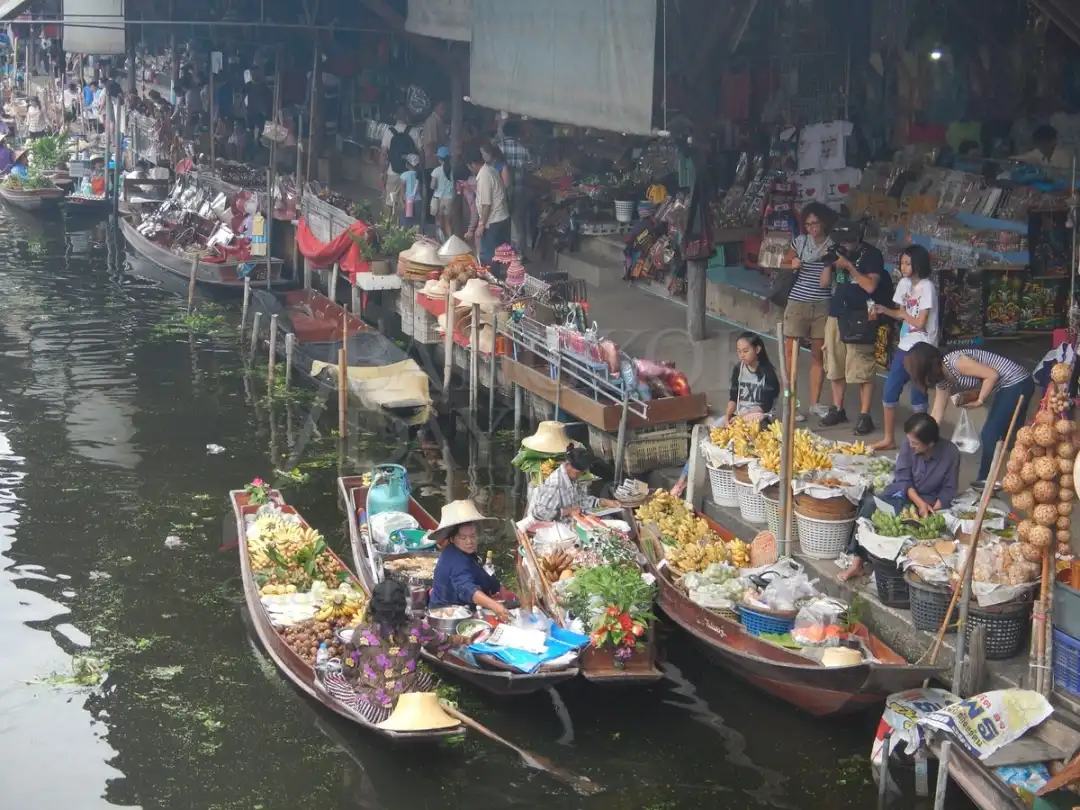
Taling Chan Floating Market is located on the Chak Phra Canal and is only open on the weekends. Orchard produce, vegetables and fish are sold from boats.

There is a live traditional Thai music performance over lunch time, but the main attraction of the market seems to be the floating restaurants.

Taling Chan Floating Market is the only floating market in the Bangkok city area and is on a canal linking the Bangkok Noi canal to the north with the Bangkok Yai to the south.

It is located across the Chao Phraya River in Thonburi and the best way to get there is to take a boat tour through the Thonburi Canals. The boat will stop here for an hour or so, giving you time to wander through the market & to taste the culinary delights.

Moored alongside the main platform are a number of boats where vendors cook up a variety of mouth watering dishes. The floating restaurant has groups of low tables and you sit on the floor to eat. The food is cooked for you on the smaller boats.

One recommended item is the "Boat Noodles". It is a famous Thai dish, not only for its excellent taste but also for the scrumptiousness of a seasoning called "chilli", which is commonly used in every Thai household.

The Taling Chan Floating Market was initiated by Chamlong Srimuang in 1987 to honor King Bhumibol's 60th birthday.

Bangkok Weekend Floating Market Tour  (Code:1006)

Pick a day and people

THB  8,000.00

THB  9,000.00

THB  11,000.00

THB  12,800.00

THB  14,100.00

THB  15,900.00

THB  17,000.00

THB  19,600.00

THB  22,050.00

THB  24,800.00

THB  27,400.00

THB  30,000.00

This tour is not designed for cruise ship passengers. Exclusive cruise ship tours are available from Klong Toey Port and Laem Chabang Port.

The Floating Market at Taling Chan only operates on the weekends so if you are in Bangkok on Saturday or Sunday this is a great place to visit. You can stop here as part of your boat trip through the Bangkok Noi canal system. There's a wonderful array of freshly cooked food to sate all appetites.

Do you want your tailor-made tour?

A tailor-made tour is the best kind of independent travel itinerary, designed and arranged just for you and your needs.
All events and activities are part of your very personal, privately guided tour.
Just ask us and we will be happy to make your tour an unforgettable experience. We have been doing this for 25 years and the quality of tailor made tours has never changed.

Request a Custom Tour

Why is a private tour a better choice?

With a private tour, you have the freedom to choose what you want to do and when you want to do it. There is much more room for flexibility and changes to your itinerary at every step of the way because you don't have to consider the needs of other travelers. The flexibility and freedom to make the most of your time is the reason why so many people choose to take a private tour rather than a group tour.

Private Tours vs Join Tours:
Bangkok Day Tours does not run join tours. All our tours are private tours, meaning that the vehicle is for the exclusive use of your group throughout the duration of your tour. This allows you to set your own pace and to move along when you have seen enough. No waiting for the stragglers! The only exception to the ANZAC Day Tours which are run on a join basis in April each year.

Tour Programme

09:30 - Pick up from Hotel

Please wait in the lobby of your hotel. We'll meet you there.

10:30 - Wat Arun - The Temple of Dawn

The first part of the boat trip will be on the Chao Phraya River, with a stop at Wat Arun on the way.Read More >

11:30 - Long-tail Boat Trip

Now the long-tail boat will pass through the locks and into the canal system of Bangkok Noi. We'll stop at the Floating Market in Taling Chan for the afternoon. Read More >

12:00 - Taling Chan Floating Market

This is an excellent place to visit when you're hungry because the food choices are amazing. You can sit and eat beside the canal while the food is cooked on the boats below you. After lunch you can wander through the market & taste the Thai desserts.Read More >

15:00 - Return to Hotel

You can expect to be back at your hotel around 3:30 or 4:00, depending on how long you stay in the market.

Important Information

Taling Chan is the only Floating Market in Bangkok city, albeit across the Chao Phraya river in Bangkok Noi. We’ll stop here as part of our tour of the Thonburi canals so you can sample the freshly cooked goodies from the floating market. This market is only open on the weekends from 0930 – 1630.

Testimonials

Attractions information

Wat Suthat & Giant Swing

Wat Suthat is one of the oldest and largest temples in Bangkok, famed for its beautiful roofline and its eight metre high 13th-century golden Buddha which contains the ashes of King Rama VIII in its base.

There are also magnificent frescoes and out the front you'll see the refurbished giant swing.

Wat Suthat was begun by King Rama I (1782-1809), founder of the Chakri dynasty, soon after his coronation. It was continued by Rama II (1809-24) and completed by Rama III (1824-51).

Rama I brought the temple's main Buddha image to Bangkok by river from Sukhothai. On its arrival, the king declared seven days of festivities and the bronze statue was paraded through the streets on the way to the wihan built specially for it at Wat Suthat. The king himself walked barefoot in the procession and it is said he was so exhausted by the time he arrived that he staggered into the temple.

A huge red teak arch, carved under Rama II, is all that remains of an original giant swing, which was used to celebrate and thank Shiva for a bountiful rice harvest and to ask for the god's blessing on the next.

Teams of men would ride the swing on arcs as high as 82 feet in the air, trying to grab a bag of silver coins with their teeth. Due to injuries and deaths, the dangerous swing ceremony was discontinued in 1932.

Attractions information

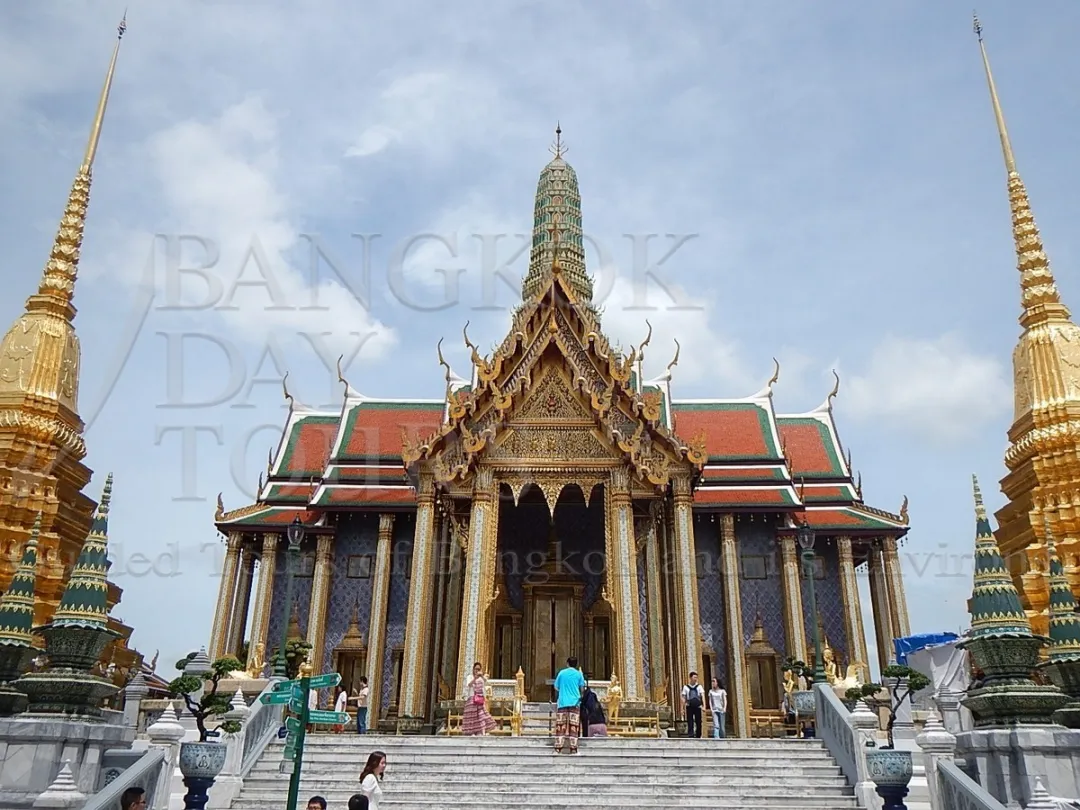
Wat Phra Kaew Emerald Temple

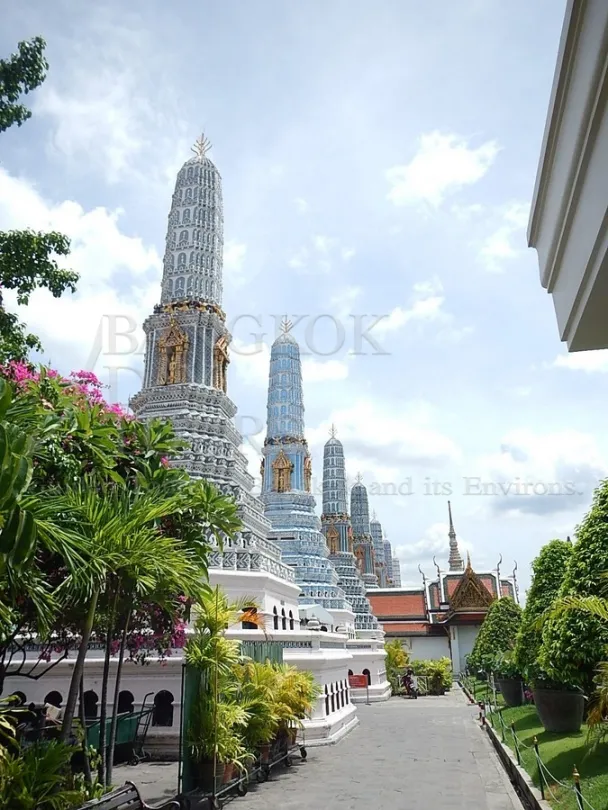
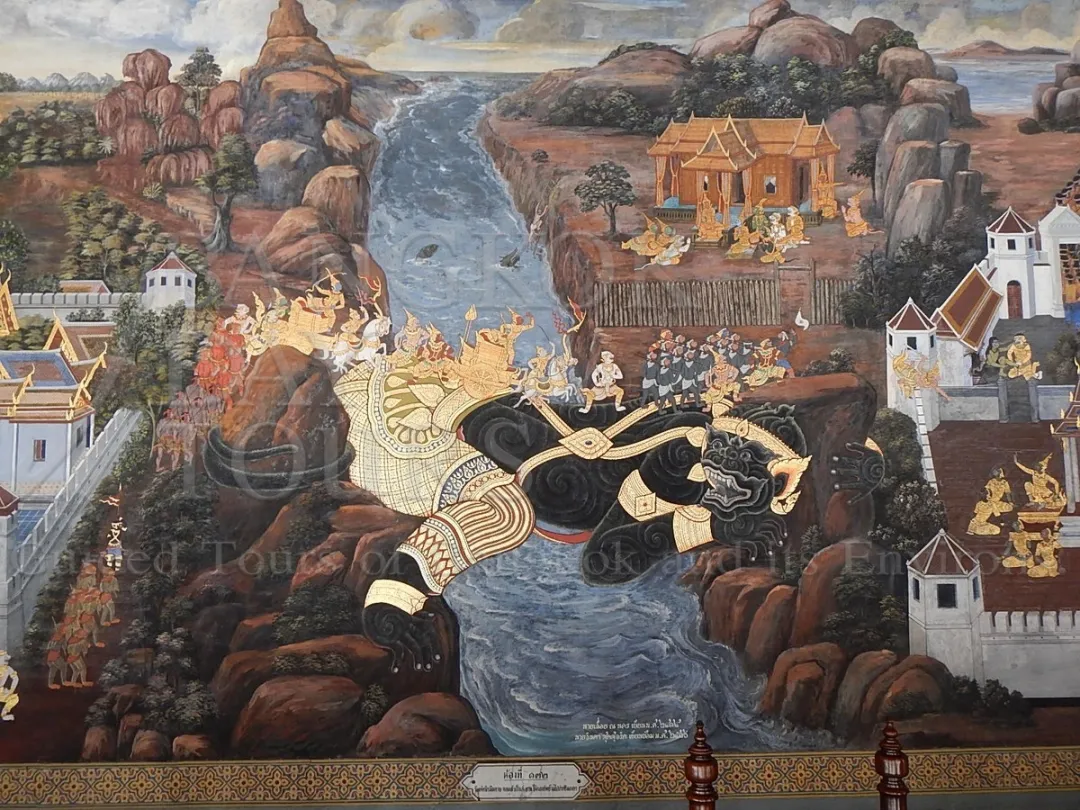
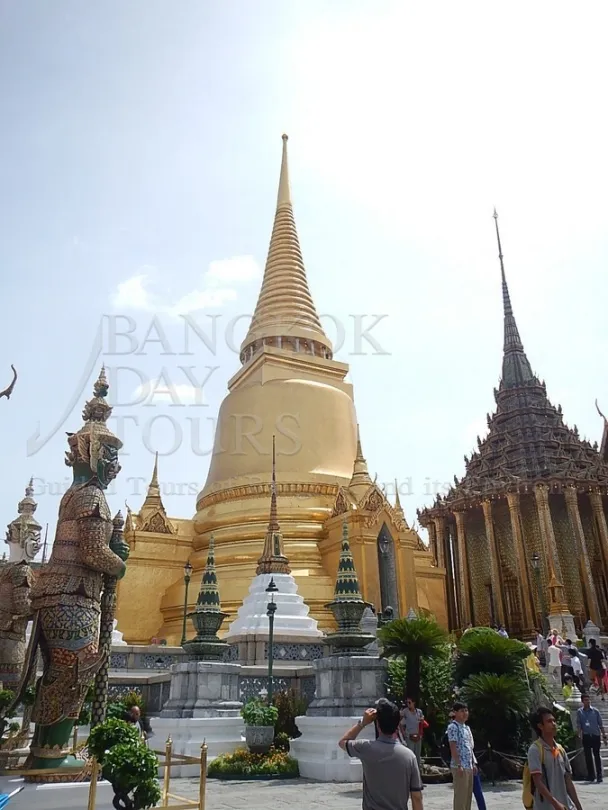
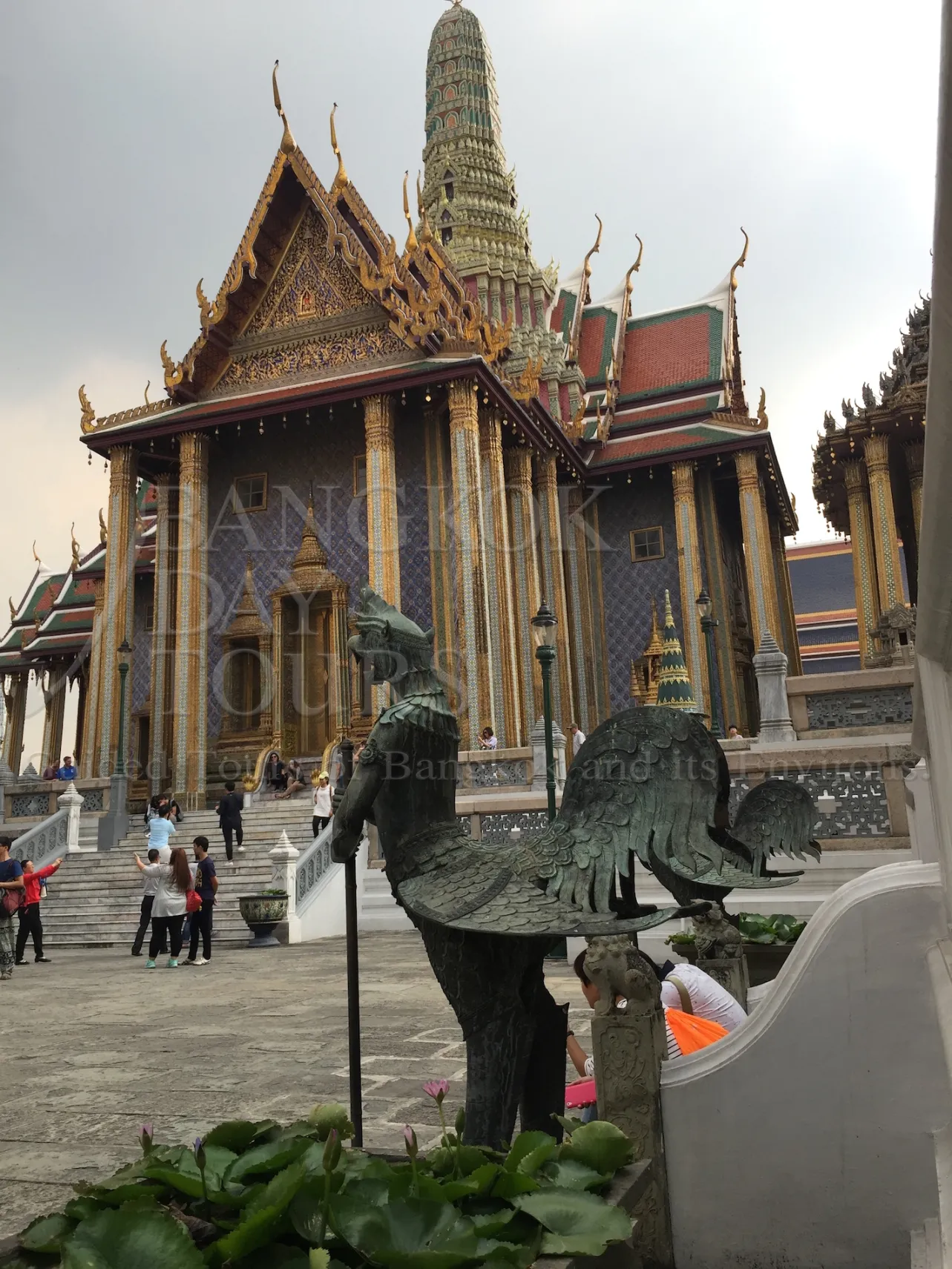
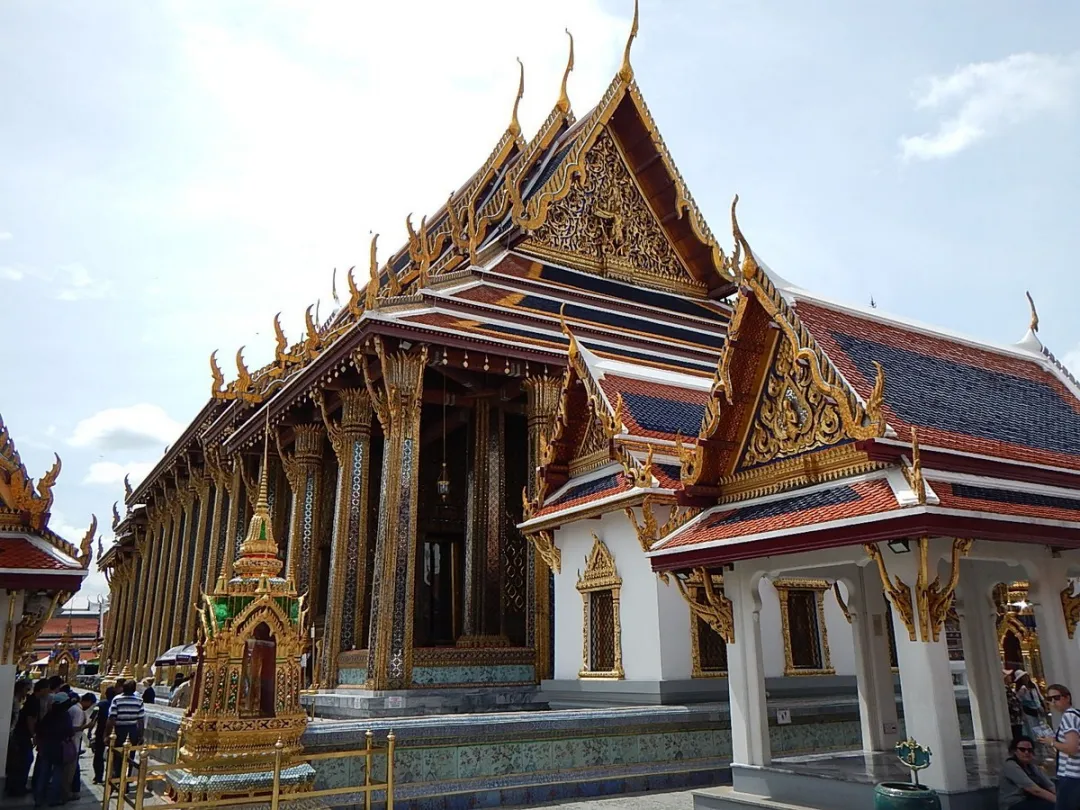
Wat Phra Kaew is regarded as the most sacred Buddhist temple in Thailand and is within the grounds of the Grand Palace.Unlike other temples it does not contain living quarters for monks. Rather, it has only the highly decorated holy buildings, statues, and pagodas. Strict dress code applies here.

The construction of the temple started when King Rama I moved the capital from Thonburi to Bangkok in 1785. The main building is the central ubosoth, which houses the Emerald Buddha.

Legend holds that the statue originated in India, but it first surfaced in the vassal Kingdom of Cambodia and was given as a gift to the King of Ayutthaya in the 15th century 1434.

The image disappeared when Burmese raiders sacked Ayutthaya and the image was feared lost.

Important Information

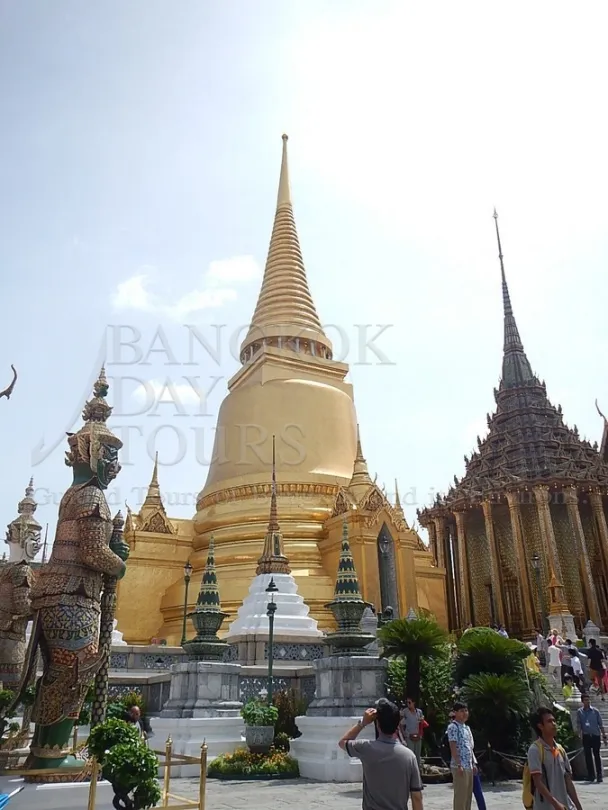
A strict dress code applies here. The Grand Palace and The Temple of the Emerald Buddha is Thailand's most sacred site. Visitors must be properly dressed before being allowed entry to the temple. Men must wear long pants and shirts with sleeves. No tank tops or singlets. Women must be similarly modestly dressed. No see-through clothes or bare shoulders. No shorts or tights. Proper shoes must be worn. No flip flops.

Attractions information

Grand Palace Bangkok

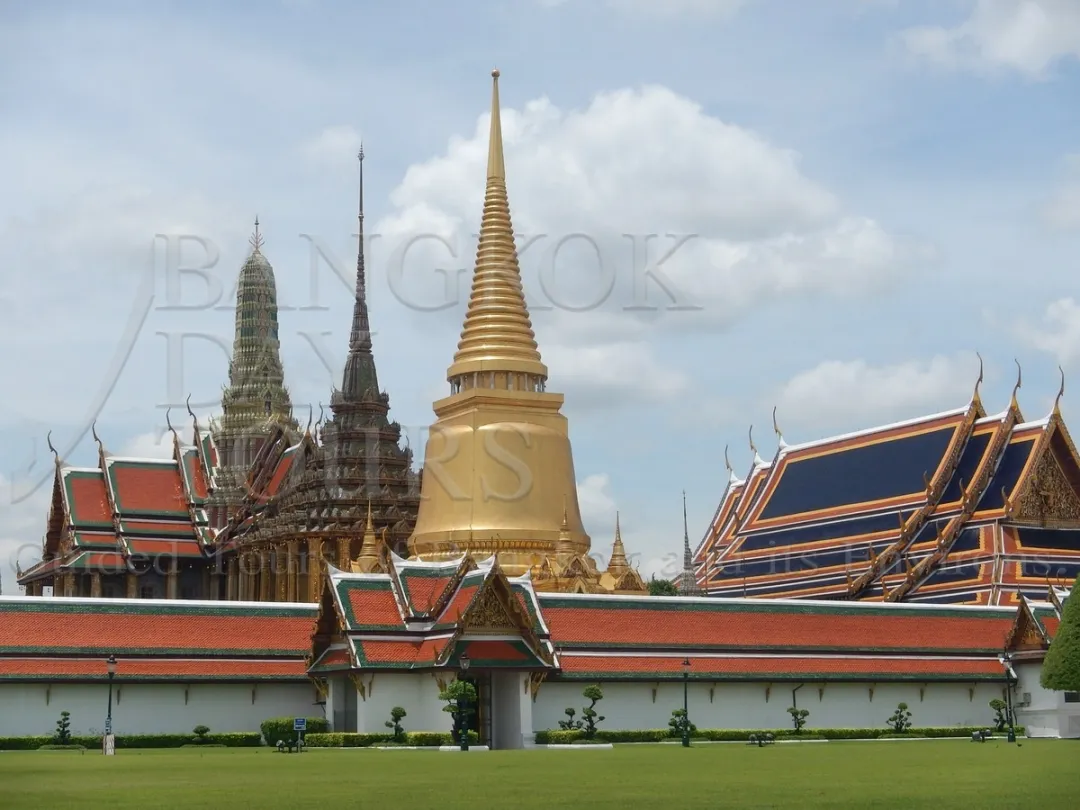
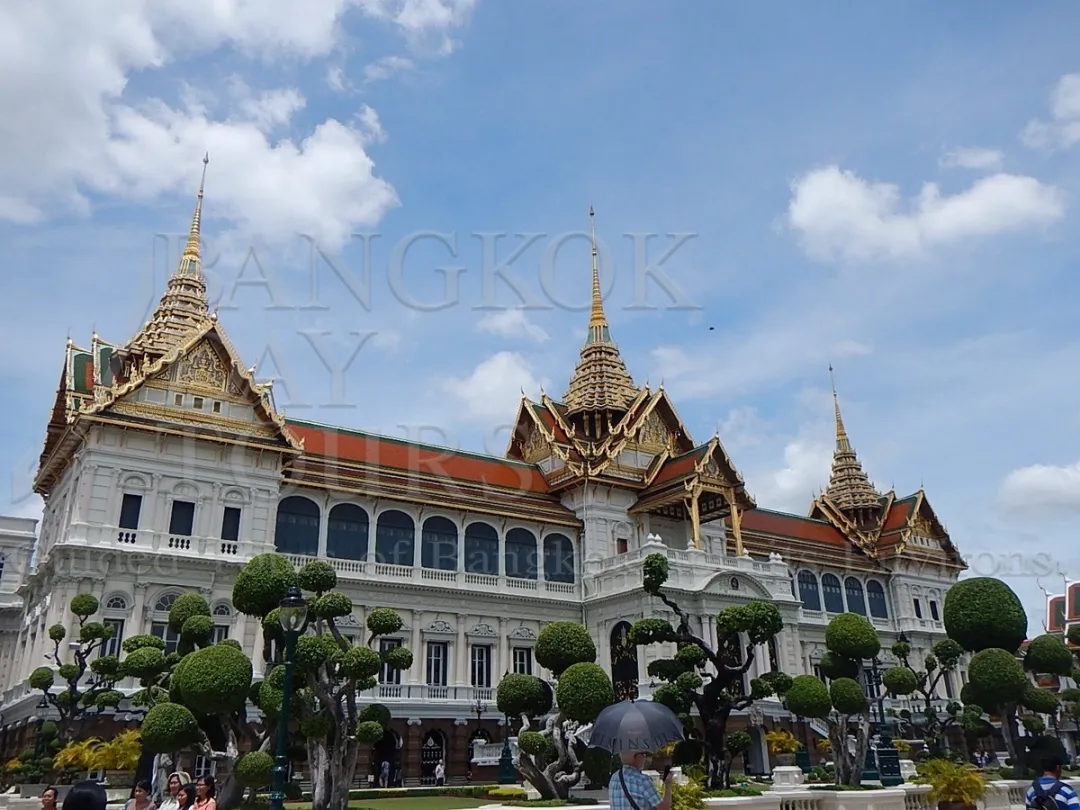
The Grand Palace is the most spectacular place in Bangkok, so if you only see one thing whilst in the city, this is the place to see.Thai people respectfully refer to it as Phra Borommaharatchawang. It served as the official residence of the King of Thailand from the 18th -20th century.

The Grand Palace complex, construction of which began in 1782 during the reign of King Rama I, sits on the east bank of the Chao Phraya River and is surrounded by a defensive wall 1,900 metres in length, which encloses an area of 218,400 square metres. Within its walls, in times past, were the Thai war ministry, state departments, and even the mint.

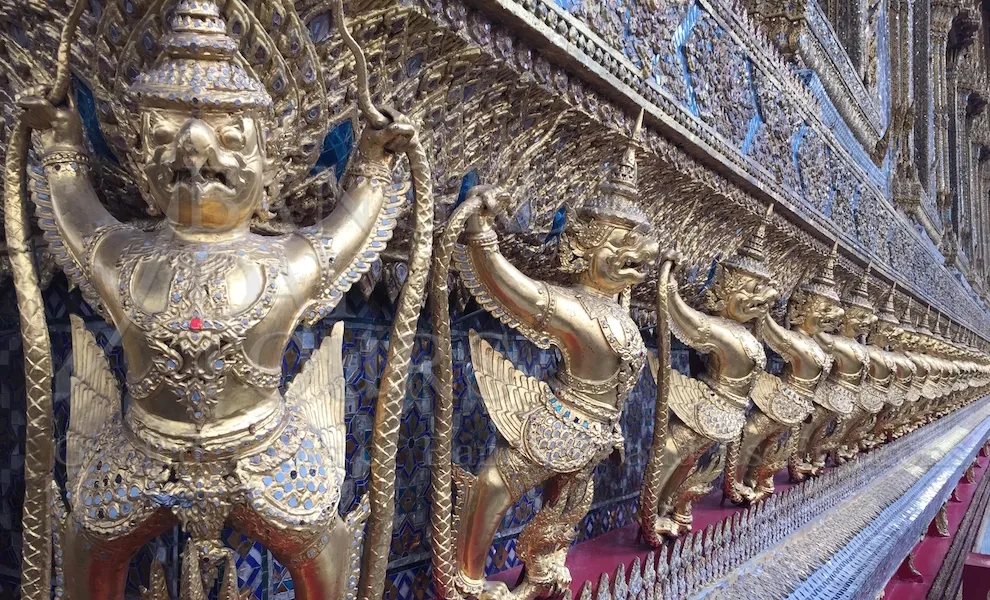
Within the palace complex are several impressive buildings including Wat Phra Kaeo or the Temple of the Emerald Buddha, which contains the revered Emerald Buddha that dates back to the 14th century.

Thai Kings stopped living in the palace in the middle of the twentieth century, but the royal residence is still used by visiting dignitaries.

Important Information

A strict dress code applies here. The Grand Palace and The Temple of the Emerald Buddha is Thailand's most sacred site. Visitors must be properly dressed before being allowed entry to the temple. Men must wear long pants and shirts with sleeves. No tank tops or singlets. Women must be similarly modestly dressed. No see-through clothes or bare shoulders. No shorts or tights. Proper shoes must be worn. No flip flops.

Attractions information

Wat Pho Reclining Buddha Temple

Wat Pho, located next to the Grand Palace, is the one of the largest & oldest temples in Bangkok and is home to more than one thousand Buddha images. The most impressive of which is the huge Reclining Buddha measuring 46 metres long & 15 metres high with mother of pearl inlaid in its eyes & feet.

Wat Phra Chetuphon Vimolmangklararm Rajwaramahaviharn is commonly known as Wat Pho and the temple complex consists of two walled compounds bisected by Soi Chetuphon running east-west.

The northern walled compound is where the Reclining Buddha and famed massage school for the blind are found. If you go for a massage make sure you ask for 'soft'!

The southern walled compound, Tukgawee, is a working Buddhist monastery with monks in residence and a school.

The principal Buddha image is "Phra Buddha Deva Patimakorn" in a gesture of seated Buddha on a three tiered pedestal called Phra Pang Smardhi (Lord Buddha in the posture of concentration), and some ashes of King Rama I are kept under the pedestal.

Made as part of Rama III's restoration, the Reclining Buddha is decorated with gold plating on his body and mother of pearl on his eyes and the soles of his feet. Each foot is 3 metres high & 5 metres long and displays 108 auspicious signs portraying natural scenes of both Indian and Chinese influences.

Attractions information

Wat Benjamabophit

at Benjamabophit or the Marble Temple is named for the gleaming white Italian marble used in its construction.

The most modern and one of the most beautiful of Bangkok's royal temples, it is also notable for its European influences like its stained-glass windows combined with Thai architecture.

Wat Benjamabophit was built in 1899 by Prince Narai, half-brother of Rama V. Thailand's current king spent his days as a monk here before his coronation. Today, it is not only a magnificent Thai temple, but a seat of learning for Buddhist monks with intellectual interests.

True to its name, the Marble Temple gleams with the polished white stone from Carrara's quarries, including the pavement of the courtyards.

Unlike the older temple complexes in Bangkok, the Marble Temple has no central wihaan or chedi. Instead, it has many smaller buildings. The main bot or chapel contains a golden Buddha statue against an illuminated blue backdrop.

Beyond the main bot is a cloister containing over 50 bronze Buddha images in many different styles, representing various Buddhist countries and regions.

Unlike most other temples, monks do not go out seeking alms but are instead visited by merit-makers from 6-7am. During the early mornings, monks chant beautifully and intensely in the main chapel.

Bangkok Royal Temples Tour (Code:1003)

Pick a day and people

THB  10,200.00

THB  10,200.00

THB  13,200.00

THB  16,700.00

THB  18,700.00

THB  20,900.00

THB  23,100.00

THB  25,600.00

THB  27,900.00

THB  34,700.00

THB  38,200.00

THB  39,600.00

This tour is not designed for cruise ship passengers. Exclusive cruise ship tours are available from Klong Toey Port and Laem Chabang Port.

Thailand is a predominantly Buddhist country, so it's no surprise to see Buddhist temples everywhere. It's easy to become overwhelmed by the number of temples, so it's a good idea to be selective about which ones you visit. Wat Phra Kaew and Wat Pho are must-sees. Wat Suthat and Wat Benjamabophit are also worth a visit.

Do you want your tailor-made tour?

A tailor-made tour is the best kind of independent travel itinerary, designed and arranged just for you and your needs.
All events and activities are part of your very personal, privately guided tour.
Just ask us and we will be happy to make your tour an unforgettable experience. We have been doing this for 25 years and the quality of tailor made tours has never changed.

Request a Custom Tour

Why is a private tour a better choice?

With a private tour, you have the freedom to choose what you want to do and when you want to do it. There is much more room for flexibility and changes to your itinerary at every step of the way because you don't have to consider the needs of other travelers. The flexibility and freedom to make the most of your time is the reason why so many people choose to take a private tour rather than a group tour.

Private Tours vs Join Tours:
Bangkok Day Tours does not run join tours. All our tours are private tours, meaning that the vehicle is for the exclusive use of your group throughout the duration of your tour. This allows you to set your own pace and to move along when you have seen enough. No waiting for the stragglers! The only exception to the ANZAC Day Tours which are run on a join basis in April each year.

Tour Programme

08:00 - Pick-up from hotel

We'll pick you up from your hotel. Please wait in the lobby.

08:45 - Wat Suthat & Giant Swing

Wat Suthat Thepwararam (Wat Suthat) is a prominent Buddhist temple in Bangkok, Thailand, known for its impressive red Giant Swing, also known as Sao Chingcha. The temple is one of Bangkok's oldest and most impressive, with a prayer hall featuring sweeping roofs, murals, and teakwood door panels.Read More >

10:00 - Wat Phra Kaew & Emerald Buddha

Wat Phra Kaew, also known as the Temple of the Emerald Buddha, is located within the walls of the Grand Palace in Bangkok. The Grand Palace is a complex of buildings, including Wat Phra Kaew, and it's a significant landmark in Bangkok, and is Thailand's most revered temple. Please dress and act accordingly.Read More >

12:00 - Lunch in Thai Restaurant (on your own expense)

Lunch will be in a Thai restaurant beside the Chao Phraya River. (Excluded on the tour price)Read More >

13:00 - Wat Pho & Reclining Buddha

Wat Pho, considered Thailand's first public university, is famous for housing the iconic Reclining Buddha. It is also home to a Thai massage school and is renowned for its traditional Thai medicine practices, making it a significant cultural and educational landmark.Read More >

14:30 - Wat Benjamabophit & Marble Temple

Wat Benchamabophit, one of Bangkok's most beautiful temples, is built of marble imported from Italy. Once you are inside, you'll be amazed by the quiet and serene large golden image of the Buddha, bearing in mind that it's located on one of Bangkok's busiest streets.Read More >

15:30 - Return to your Hotel

Drop off back at your hotel or elsewhere if you want to go shopping.

Important Information

A strict dress code applies for this day. The Grand Palace with The Temple of the Emerald Buddha is Thailand’s most sacred site. Visitors must be properly dressed before being allowed entry to the temple. Men must wear long pants and shirts with sleeves. No tank tops or singlets. Women must be similarly modestly dressed. No see-through clothes or bare shoulders. No shorts or tights. Proper shoes must be worn. No flip flops.

Testimonials

Attractions information

Wat Saket Golden Mount

The Golden Mount or 'Phu Khao Thong' is part of the Wat Saket temple located just outside the old royal city precincts, next to the Pom Mahakhan fort.

There are about 300 steps in all & it's not a strenuous climb, as the slope is quite gentle and there are numerous spots to stop and see something.
The Golden Mount has a somewhat unusual history in that it was expanded by King Rama III, who wanted to build a large chedi on the site to mark the entrance to the city. However, the soft marshy ground could not support such a large structure and it collapsed before it was completed.

During the late-18th century the temple served as the capital's crematorium. During the following 100 years, the temple became the dumping ground for some 60,000 plague victims who were not allowed to be buried within the royal city precincts.

From the ground, a wide stairway spirals up and around the sides of the mount and the short steps ensure you don't expend too much energy.

The best time to visit the temple is during the cool season from late November to January, when not only is the temperature much cooler, but the frangipani trees around the base are in bloom, giving off their wonderful jasmine-like smell.

In the first week of November, Wat Saket hosts an annual temple fair with lots of lanterns.

Attractions information

Wat Pho Reclining Buddha Temple

Wat Pho, located next to the Grand Palace, is the one of the largest & oldest temples in Bangkok and is home to more than one thousand Buddha images. The most impressive of which is the huge Reclining Buddha measuring 46 metres long & 15 metres high with mother of pearl inlaid in its eyes & feet.

Wat Phra Chetuphon Vimolmangklararm Rajwaramahaviharn is commonly known as Wat Pho and the temple complex consists of two walled compounds bisected by Soi Chetuphon running east-west.

The northern walled compound is where the Reclining Buddha and famed massage school for the blind are found. If you go for a massage make sure you ask for 'soft'!

The southern walled compound, Tukgawee, is a working Buddhist monastery with monks in residence and a school.

The principal Buddha image is "Phra Buddha Deva Patimakorn" in a gesture of seated Buddha on a three tiered pedestal called Phra Pang Smardhi (Lord Buddha in the posture of concentration), and some ashes of King Rama I are kept under the pedestal.

Made as part of Rama III's restoration, the Reclining Buddha is decorated with gold plating on his body and mother of pearl on his eyes and the soles of his feet. Each foot is 3 metres high & 5 metres long and displays 108 auspicious signs portraying natural scenes of both Indian and Chinese influences.

Attractions information

Grand Palace Bangkok

The Grand Palace is the most spectacular place in Bangkok, so if you only see one thing whilst in the city, this is the place to see.Thai people respectfully refer to it as Phra Borommaharatchawang. It served as the official residence of the King of Thailand from the 18th -20th century.

The Grand Palace complex, construction of which began in 1782 during the reign of King Rama I, sits on the east bank of the Chao Phraya River and is surrounded by a defensive wall 1,900 metres in length, which encloses an area of 218,400 square metres. Within its walls, in times past, were the Thai war ministry, state departments, and even the mint.

Within the palace complex are several impressive buildings including Wat Phra Kaeo or the Temple of the Emerald Buddha, which contains the revered Emerald Buddha that dates back to the 14th century.

Thai Kings stopped living in the palace in the middle of the twentieth century, but the royal residence is still used by visiting dignitaries.

Important Information

A strict dress code applies here. The Grand Palace and The Temple of the Emerald Buddha is Thailand's most sacred site. Visitors must be properly dressed before being allowed entry to the temple. Men must wear long pants and shirts with sleeves. No tank tops or singlets. Women must be similarly modestly dressed. No see-through clothes or bare shoulders. No shorts or tights. Proper shoes must be worn. No flip flops.

Attractions information

Lunch in a Thai Restaurant

Thai food has a range of tastes to suit all pallets so please don't make the mistake of thinking that all Thai food is spicy. Some dishes are very spicy but there are many which are not spicy at all. Rather, they are a wonderful combination of sweet and sour.

Thai dishes are normally shared by all.
Thai Cuisine is well-known for being hot and spicy and for its balance of the five fundamental flavors in the overall meal - hot (spicy), sour, sweet, salty, and bitter.

Thai food has four regional cuisines corresponding to the four main regions of the country: Northern, Northeastern (or Isan), Central, and Southern, each cuisine featuring locally grown food.

Southern curries, for example, tend to contain coconut milk and fresh turmeric, while northeastern dishes often include lime juice. The cuisine of Isan is heavily influenced by Laos.

Many popular dishes eaten in Thailand were originally Chinese dishes which were introduced to Thailand mainly by Teochew people who make up the majority of the Thai Chinese. Such dishes include Jok, Kway teow Rad Na, Khao Kha Moo and Khao Mun Gai.

Thai food is known for its enthusiastic use of fresh rather than dried herbs and spices as well as fish sauce.

Attractions information

Jim Thompson House

Jim Thompson was an American who settled in Thailand after the end of the Second World War. He devoted himself to revitalizing a cottage industry of hand-woven silk, which was dying out.

His house was built from parts of six antique Thai houses which had been dismantled and brought to Bangkok.
Jim Thompson located a group of Muslim weavers in the Bangkok neighborhood of Bangkrua and provided hitherto unavailable color-fast dyes, standardized looms, and technical assistance to those interested in weaving on a piece-work basis.

His endeavour showed a profit from its first year of operation. Thompson's determination to keep his company cottage-based was significant for the women who made up the bulk of his work force.

In 1958 he began what was to be the pinnacle of his architectural achievement, a new home to showcase his art collection. Formed from parts of six antique Thai houses, his home sits on a canal across from Bangkrua, where his weavers were then located. Most of the 19th century houses were dismantled and moved from Ayutthaya, but the largest - a weaver's house, now the living room - came from Bangkrua.

During Easter 1967, Jim Thompson disappeared while on holiday in the Cameron Highlands of Malaysia. An extensive and extended search failed to reveal any clues about his disappearance.

Bangkok Historic Places Tour (Code:1001)

Pick a day and people

THB  9,600.00

THB  10,800.00

THB  13,200.00

THB  16,700.00

THB  18,700.00

THB  20,900.00

THB  23,100.00

THB  25,600.00

THB  27,900.00

THB  34,700.00

THB  38,200.00

THB  38,200.00

This tour is not designed for cruise ship passengers. Exclusive cruise ship tours are available from Klong Toey Port and Laem Chabang Port.

Let's start at the gateway to the original city, the Golden Mount or Wat Saket. Then to Thailand's first university at Wat Pho where you'll see the huge Reclining Buddha. We must include the Grand Palace & Wat Phra Kaew. It was home to 7 Thai kings. Finally, a look at Jim Thompson's beautiful house.

Do you want your tailor-made tour?

A tailor-made tour is the best kind of independent travel itinerary, designed and arranged just for you and your needs.
All events and activities are part of your very personal, privately guided tour.
Just ask us and we will be happy to make your tour an unforgettable experience. We have been doing this for 25 years and the quality of tailor made tours has never changed.

Request a Custom Tour

Why is a private tour a better choice?

With a private tour, you have the freedom to choose what you want to do and when you want to do it. There is much more room for flexibility and changes to your itinerary at every step of the way because you don't have to consider the needs of other travelers. The flexibility and freedom to make the most of your time is the reason why so many people choose to take a private tour rather than a group tour.

Private Tours vs Join Tours:
Bangkok Day Tours does not run join tours. All our tours are private tours, meaning that the vehicle is for the exclusive use of your group throughout the duration of your tour. This allows you to set your own pace and to move along when you have seen enough. No waiting for the stragglers! The only exception to the ANZAC Day Tours which are run on a join basis in April each year.

Tour Programme

08:00 - Pick up from hotel

We'll pick you up from your hotel. Please wait in the lobby.

08:45 - Wat Saket Golden Mount

Wat Saket is one of the oldest temples in Bangkok. It is famous for its towering height. It is also famous for the Golden Mount Chedi. Read More >

09:45 - Wat Pho Reclining Buddha

Wat Pho is considered Thailand's first university. It houses the famous Reclining Buddha.Read More >

10:30 - Grand Palace Wat Phra Kaew

The Grand Palace incorporates Wat Phra Kaew, or the Temple of the Emerald Buddha, which is Thailand's most revered temple.Read More >

12:30 - Lunch in Thai Restaurant

Lunch will be in a Thai restaurant beside the Chao Phraya River.Read More >

14:00 - Jim Thompson's House

The Jim Thompson House is a museum in central Bangkok, Thailand, housing the art collection of American businessman and architect James Harrison Wilson. Take a guided tour through one of the most authentic traditional Thai houses which has been beautifully preserved. Read More >

15:30 - Return to your hotel

Drop off back at your hotel or elsewhere if you want to go shopping.

Important Information

A strict dress code applies here. The Grand Palace with The Temple of the Emerald Buddha is Thailand’s most sacred site. Visitors must be properly dressed before being allowed entry to the temple. Men must wear long pants and shirts with sleeves. No tank tops or singlets. Women must be similarly modestly dressed. No see-through clothes or bare shoulders. No shorts or tights. Proper shoes must be worn. No flip flops.

Testimonials

Attractions information

Laem Chabang Port

Laem Chabang is Thailand's largest port & is the main container port for Bangkok. It is located two hours to the southeast of Bangkok & about 30 minutes from the resort city of Pattaya.

The larger cruise ships have to dock here because of the shallowness of the Chao Phraya river's Klong Toey Port.
Laem Chabang Port undertook a major program to encourage development outside Bangkok and take advantage of the proximity to the Gulf of Thailand.

Construction began in 1988 and the Laem Chabang container port was completed in 1991.

It's now ranked in the top 20 of the busiest ports in the world. Much of the international shipping reaching Thailand goes through Laem Chabang. The port operates 24 hours a day, 7 days a week, 365 days a year.

As a port town, the economy is based on shipping services, as well as retail and tourism. The town is being marketed as an alternative to seedy Pattaya. Sukhumvit Road goes through the town.

Cruise ships using Laem Chabang Port during the 2009-2010 season include Costa Classica, Cunard's Queen Mary 2 & Queen Victoria, HAL's Amsterdam & Volendam, P&O's Arcadia, Diamond Princess, Ocean Princess & Sun Princess, Regent Seven Seas Mariner, Navigator & Voyager, Royal Caribbean's Legend of the Seas, Silver Sea's Shadow & Whisper and Voyages of Discovery.

Attractions information

Grand Palace Bangkok

The Grand Palace is the most spectacular place in Bangkok, so if you only see one thing whilst in the city, this is the place to see.Thai people respectfully refer to it as Phra Borommaharatchawang. It served as the official residence of the King of Thailand from the 18th -20th century.

The Grand Palace complex, construction of which began in 1782 during the reign of King Rama I, sits on the east bank of the Chao Phraya River and is surrounded by a defensive wall 1,900 metres in length, which encloses an area of 218,400 square metres. Within its walls, in times past, were the Thai war ministry, state departments, and even the mint.

Within the palace complex are several impressive buildings including Wat Phra Kaeo or the Temple of the Emerald Buddha, which contains the revered Emerald Buddha that dates back to the 14th century.

Thai Kings stopped living in the palace in the middle of the twentieth century, but the royal residence is still used by visiting dignitaries.

Important Information

A strict dress code applies here. The Grand Palace and The Temple of the Emerald Buddha is Thailand's most sacred site. Visitors must be properly dressed before being allowed entry to the temple. Men must wear long pants and shirts with sleeves. No tank tops or singlets. Women must be similarly modestly dressed. No see-through clothes or bare shoulders. No shorts or tights. Proper shoes must be worn. No flip flops.

Attractions information

Chao Phraya River

The Chao Phraya River is regarded as the bloodline of the Thai people. It has its origins in four rivers flowing from the northern region of the country, the Ping, Wang, Yom and Nan which meet at Pak Nam Pho in Nakhon Sawan Province. The Chao Phraya River is 370 kilometers long.

Much of Thai history can be traced along the banks of the Chao Phraya River, because in the early days Thai people settled along the river banks and only with the advent of roads in recent times have they ventured further away.

Today the Chao Phraya River remains the most important waterway for the people of central Thailand.

It is a working river, with daily commuter boats plying up and down from Nonthaburi to Sathorn covering 31 piers along the way.

Tug boats towing three or four barges laden with sand are frequently seen as they make their way to the various construction sites down river.

In the evening, as dusk gives way to night, many dinner cruise boats take their place on the river, going up as far as the Rama VIII bridge and downstream to the Rama IX bridge.

The Chao Phraya River is vibrantly interesting in the daytime and romantically beautiful at night.

Attractions information

Bangkok Noi Canals

Bangkok has often been called the Venice of East, but over time many of the canals in the city have been filled in to make roads, so it is nice that this part of the city has retained the charm of living along the banks of serene canals. Take a long-tail boat and explore the myriad waterways.

Bangkok Noi Canal flows in a horseshoe shape through the old Bangkok Noi community in the Thonburi area.

The community was established in the Ayutthaya Period and King Chai Racha Dhiraj (1534-1546) commanded the excavation of a waterway from Bangkok Noi Canal to Bangkok Yai Canal as a shortcut to facilitate transport and communications.

Along both banks of the Bangkok Noi Canal, visitors see places of cultural and historical significance. On a boat trip you can pass the Thonburi railway station and the Royal Barges Museum. The boat trip also takes in several major temples and traditional Thai houses with carved designs.

Although cargo boats now use the direct route along the Chao Phraya River, the lively Bangkok Noi Canal community still endures. It reflects a bygone Thai lifestyle, inextricably related with waterways, and a Thai identity handed down from generation to generation.

Attractions information

Floating Market Damnoen Saduak

Waterways have always been an integral part of Thai life and many communities depended entirely on them for their daily existence.

Long before cars, boats of all shapes and sizes plied the rivers and canals through the kingdom of Thailand, trading their wares and delivering their supplies.
The Floating Market at Damnoen Saduak is located in Ratchaburi Province which is just over 100 kms or two hours drive from the capital city of Bangkok.

This is a particularly fertile area, being irrigated by a 32 kilometre straight-line canal constructed by King Rama IV way back in 1866.

It connects the Taachin River with the Mae Klong River and became a major transport artery between the provinces of Samut Sakorn and Samut Songkram.

Apart from providing transportation, Damnoen Saduak Canal also provides year-round water, with more than 200 small canals having been dug by farmers to irrigate their land.

The area is famous for the quality of its fruit, namely grapes, mangoes, bananas, oranges, papaya & coconut.

Nowadays, both sides of the canal are densely populated and bright and early every morning vendors from the surrounding area turn up to trade their wares.

Bangkok Temples & Floating Market (Code:LC2114)

Pick a day and people

THB  21,900.00

THB  27,900.00

THB  29,900.00

THB  32,900.00

THB  35,900.00

THB  38,900.00

THB  42,900.00

THB  47,900.00

THB  52,900.00

THB  71,800.00

THB  74,800.00

THB  77,800.00

This tour is exclusive to Laem Chabang Port Cruise Ship Passengers. There are also exclusive tours.

From Laem Chabang, you will go directly to the Grand Palace in Bangkok and then enjoy lunch at a Thai restaurant beside the Chao Phraya River. After a long-tail boat trip through the canals, you will check in to your hotel. The next morning, you will visit the Floating Market at Damnoen Saduak, and then return to the ship.

Do you want your tailor-made tour?

A tailor-made tour is the best kind of independent travel itinerary, designed and arranged just for you and your needs.
All events and activities are part of your very personal, privately guided tour.
Just ask us and we will be happy to make your tour an unforgettable experience. We have been doing this for 25 years and the quality of tailor made tours has never changed.

Request a Custom Tour

Why is a private tour a better choice?

With a private tour, you have the freedom to choose what you want to do and when you want to do it. There is much more room for flexibility and changes to your itinerary at every step of the way because you don't have to consider the needs of other travelers. The flexibility and freedom to make the most of your time is the reason why so many people choose to take a private tour rather than a group tour.

Private Tours vs Join Tours:
Bangkok Day Tours does not run join tours. All our tours are private tours, meaning that the vehicle is for the exclusive use of your group throughout the duration of your tour. This allows you to set your own pace and to move along when you have seen enough. No waiting for the stragglers! The only exception to the ANZAC Day Tours which are run on a join basis in April each year.

Tour Programme

09:00 - Day 1 Departs

09:00 - Pick up dockside Laem Chabang Port

We'll be waiting for you when you get off the ship. Your guide will have a sign with your name on it. The sooner you get off the sooner we can leave.Read More >

11:30 - Grand Palace Wat Phra Kaew

The Grand Palace includes the Wat Phra Kaew (also known as the Temple of the Emerald Buddha), a site of utmost significance in Thailand's religious landscape and a prominent tourist attraction.Read More >

13:00 - Lunch in a Thai Restaurant

Lunch will be served in a local Thai restaurant beside the Chao Phraya river.Read More >

14:00 - Long-tail Boat Trip

Enjoy a long-tail boat trip on the river and through the canal system on the Thonburi side. We will stop at Wat Arun, also known as the Royal Temple of King Rama II or the Temple of Dawn.Read More >

16:30 - Check-in to your Bangkok Hotel

You can expect to be in your hotel around 4:30pm depending on the traffic. Please remember that your overnight accommodation and dinner are not included in the tour cost.
07:00 - Day 2 Departs

07:00 - Pick up from your hotel

You'll need to check-out extra early and then meet us in the lobby at 7:00am. Today is a full day with lots to see so please don't be late.

08:30 - Floating Market Damnoen Saduak

The popular Damnoen Saduak Floating Market in Ratchaburi Province is about an hour and a half to two hours by car from Bangkok. It's a popular destination, often visited by tourists and locals alike. You will have sufficient time to take the boat trip and explore the main market area.Read More >

11:00 - Depart for Laem Chabang

You can relax in air conditioned comfort while the driver returns you to your ship at Laem Chabang.

15:00 - Arrive back at your ship

We'll stop for a quick lunch on the way back to the ship. You can expect to be back on board by 3:00pm depending on the traffic.
Important Information

A strict dress code applies here. The Grand Palace and The Temple of the Emerald Buddha is Thailand’s most sacred site. Visitors must be properly dressed before being allowed entry to the temple. Men must wear long pants and shirts with sleeves. No tank tops or singlets. Women must be similarly modestly dressed. No see-through clothes or bare shoulders. No shorts or tights. Proper shoes must be worn. No flip flops.

Testimonials

Attractions information

Laem Chabang Port

Laem Chabang is Thailand's largest port & is the main container port for Bangkok. It is located two hours to the southeast of Bangkok & about 30 minutes from the resort city of Pattaya.

The larger cruise ships have to dock here because of the shallowness of the Chao Phraya river's Klong Toey Port.
Laem Chabang Port undertook a major program to encourage development outside Bangkok and take advantage of the proximity to the Gulf of Thailand.

Construction began in 1988 and the Laem Chabang container port was completed in 1991.

It's now ranked in the top 20 of the busiest ports in the world. Much of the international shipping reaching Thailand goes through Laem Chabang. The port operates 24 hours a day, 7 days a week, 365 days a year.

As a port town, the economy is based on shipping services, as well as retail and tourism. The town is being marketed as an alternative to seedy Pattaya. Sukhumvit Road goes through the town.

Cruise ships using Laem Chabang Port during the 2009-2010 season include Costa Classica, Cunard's Queen Mary 2 & Queen Victoria, HAL's Amsterdam & Volendam, P&O's Arcadia, Diamond Princess, Ocean Princess & Sun Princess, Regent Seven Seas Mariner, Navigator & Voyager, Royal Caribbean's Legend of the Seas, Silver Sea's Shadow & Whisper and Voyages of Discovery.

Attractions information

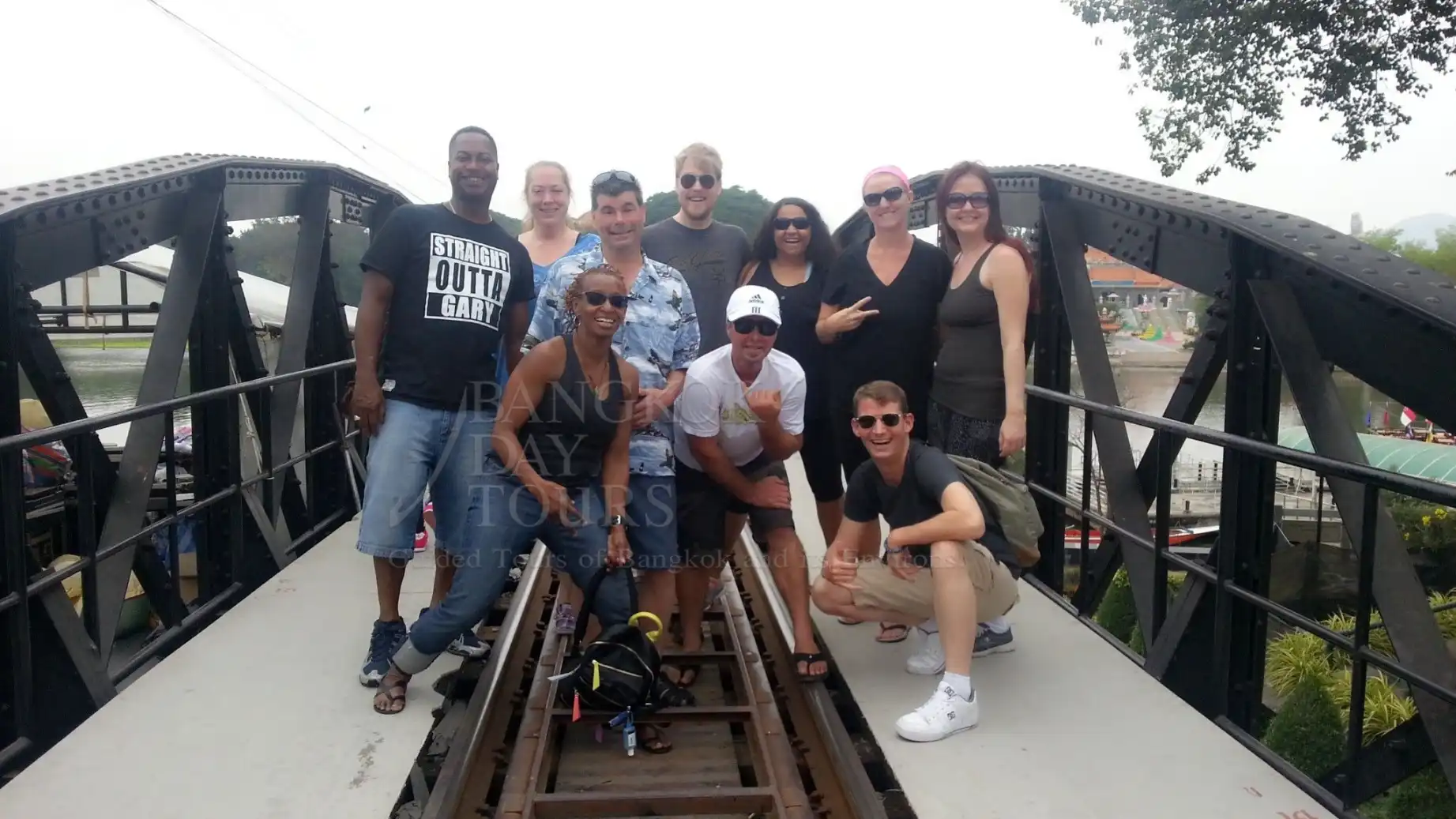
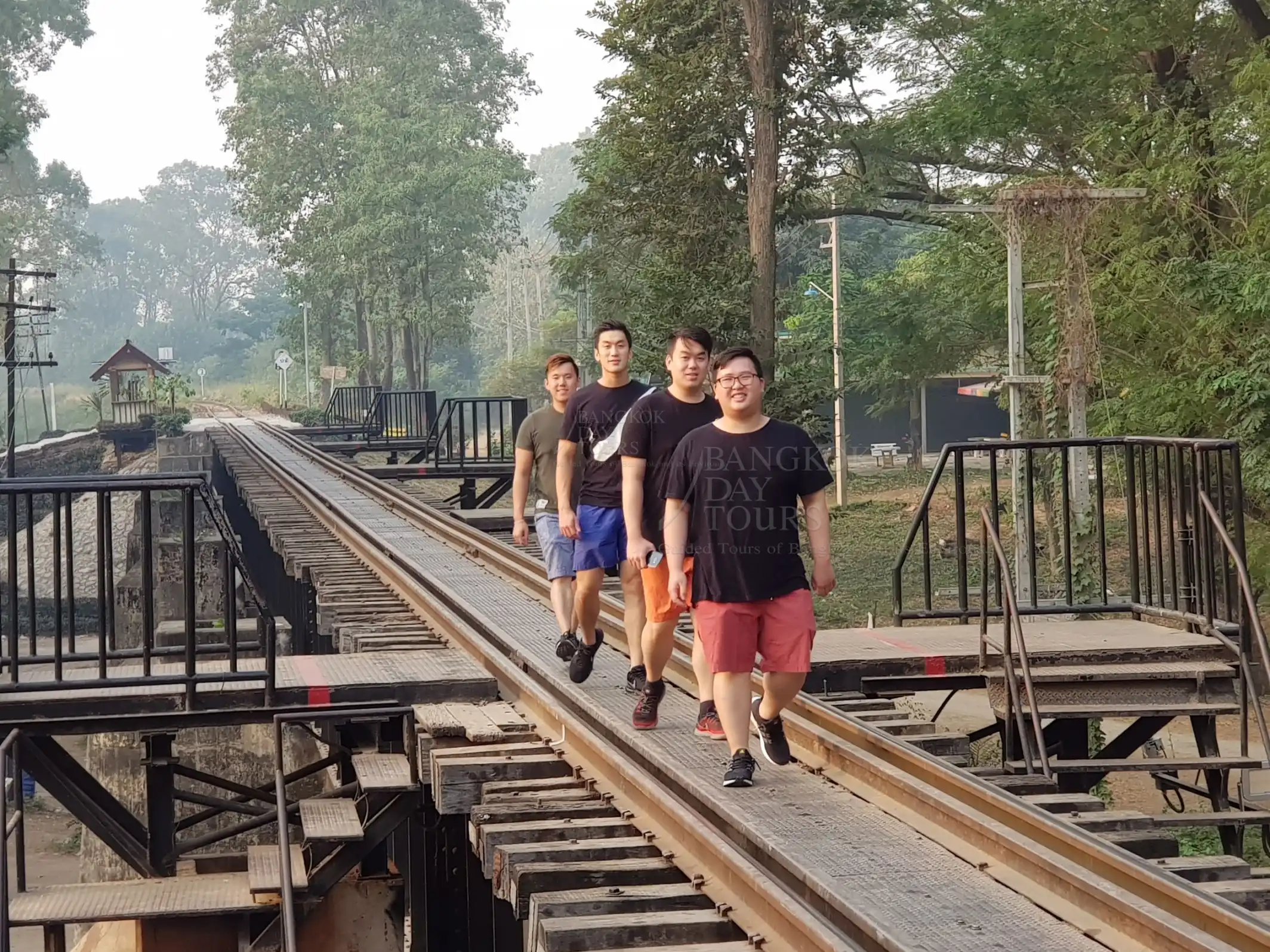
Bridge over the River Kwai

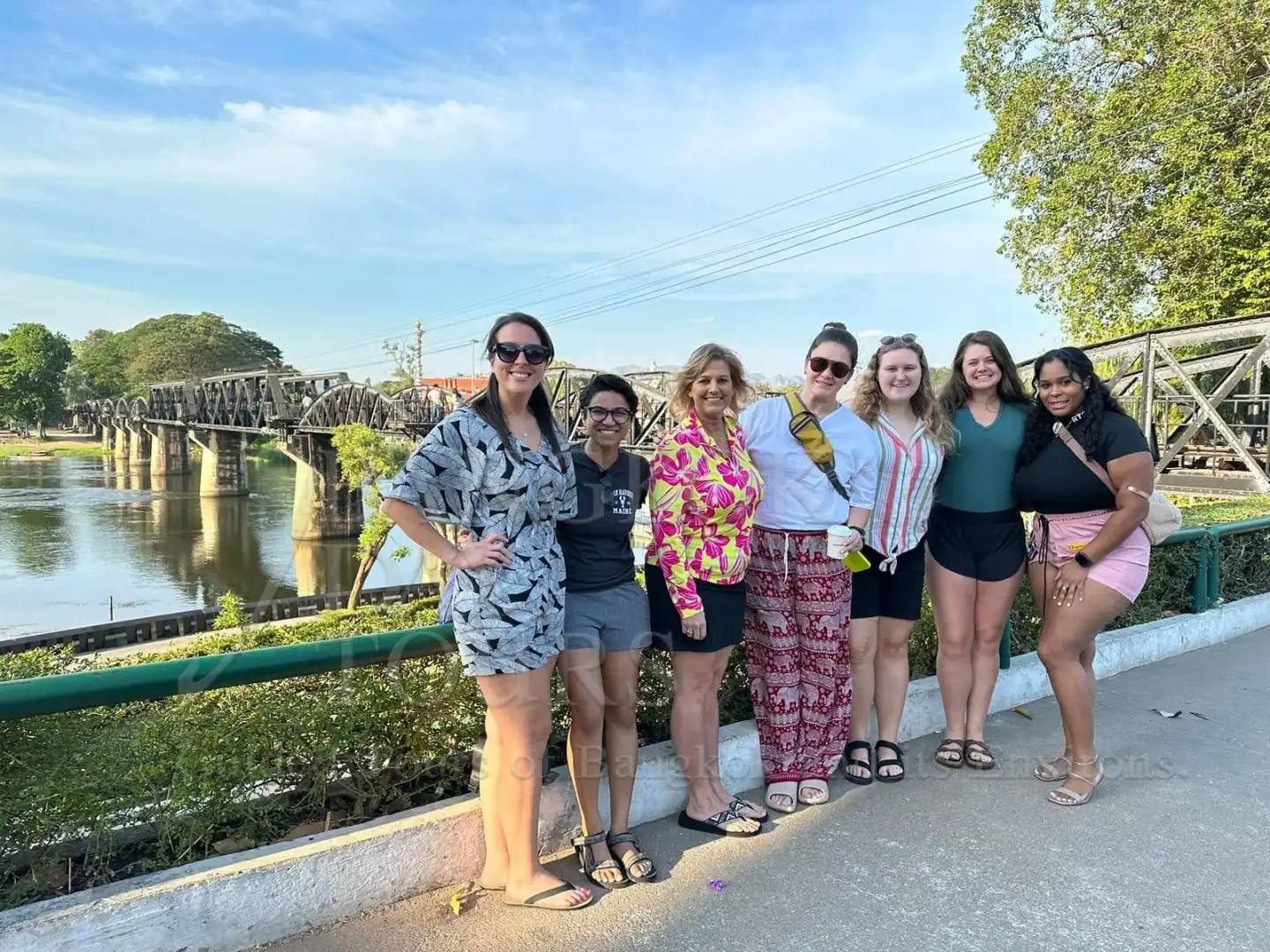
The Bridge over the River Kwai was built during World War II for the Japanese Army using Allied POWs.

Altogether, 61,700 British, American, Australian, Dutch and New Zealand soldiers and a large number of Chinese, Vietnamese, Japanese, Malaysian, Thai, Burmese and Indian labourers were involved.
Two bridges were actually built side by side. A wooden trestle bridge, which is no longer there, was completed in February 1943 and an eleven span steel bridge completed in April 1943.

This bridge had been dismantled by the Japanese and brought to Kanchanaburi from Java in 1942. The central spans were destroyed by Allied bombings and rebuilt by British Army Engineers immediately after the war.

It was part of the strategic railway linking Thailand with Burma. During the construction of the bridge over the Khwae Yai River - River Kwai as it is known among foreigners - the brutalities of war, disease and starvation claimed thousands of POWs lives.

The bridge was immortalised in the book by Pierre Boulle entitled The Bridge Over The River Kwai and later in the movie of the same name. Unfortunately, he had never been to Kanchanaburi or he would have known that the railway does not cross the River Kwai. It actually crosses the Mae Klong River, so the Thai authorities simply renamed the river to aid tourism!

Attractions information

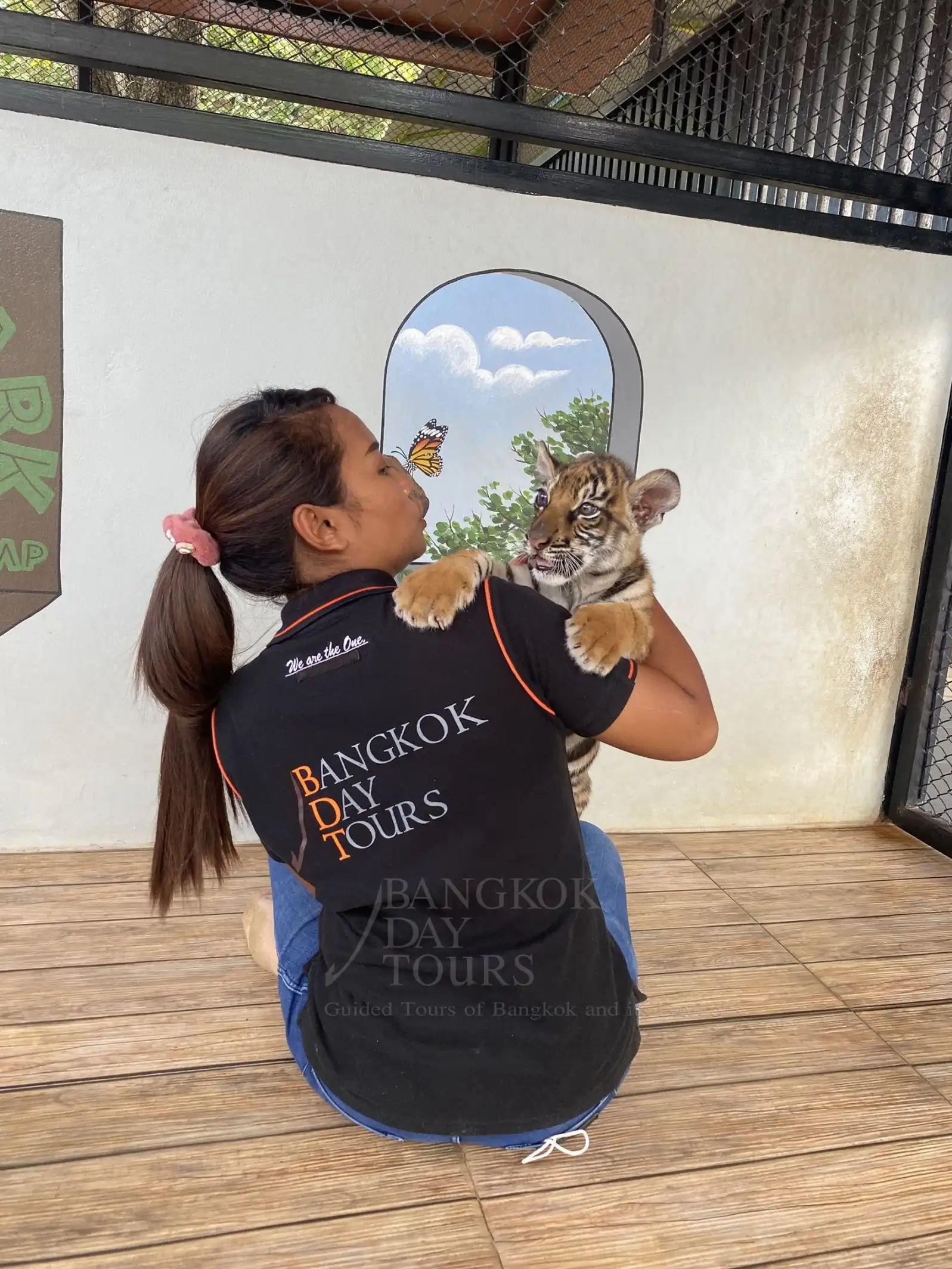
Tiger Cubs @ Wildlife Sanctuary Safari

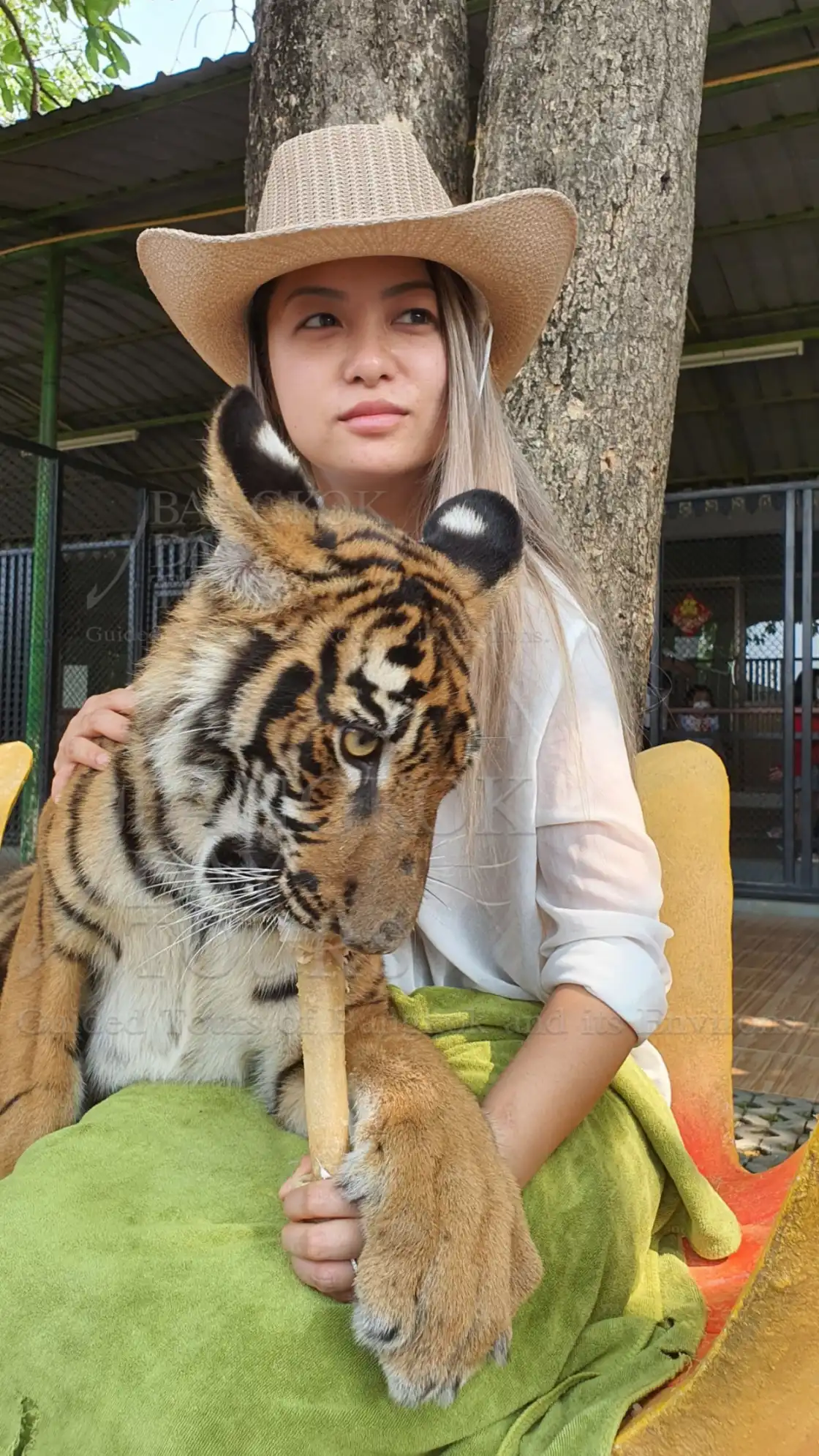
The tiger (Panthera tigris) is the largest cat species. The species is classified in the genus Panthera with the lion, leopard, jaguar and snow leopard. (we will feed the Tiger, age less than one year)

Attractions information

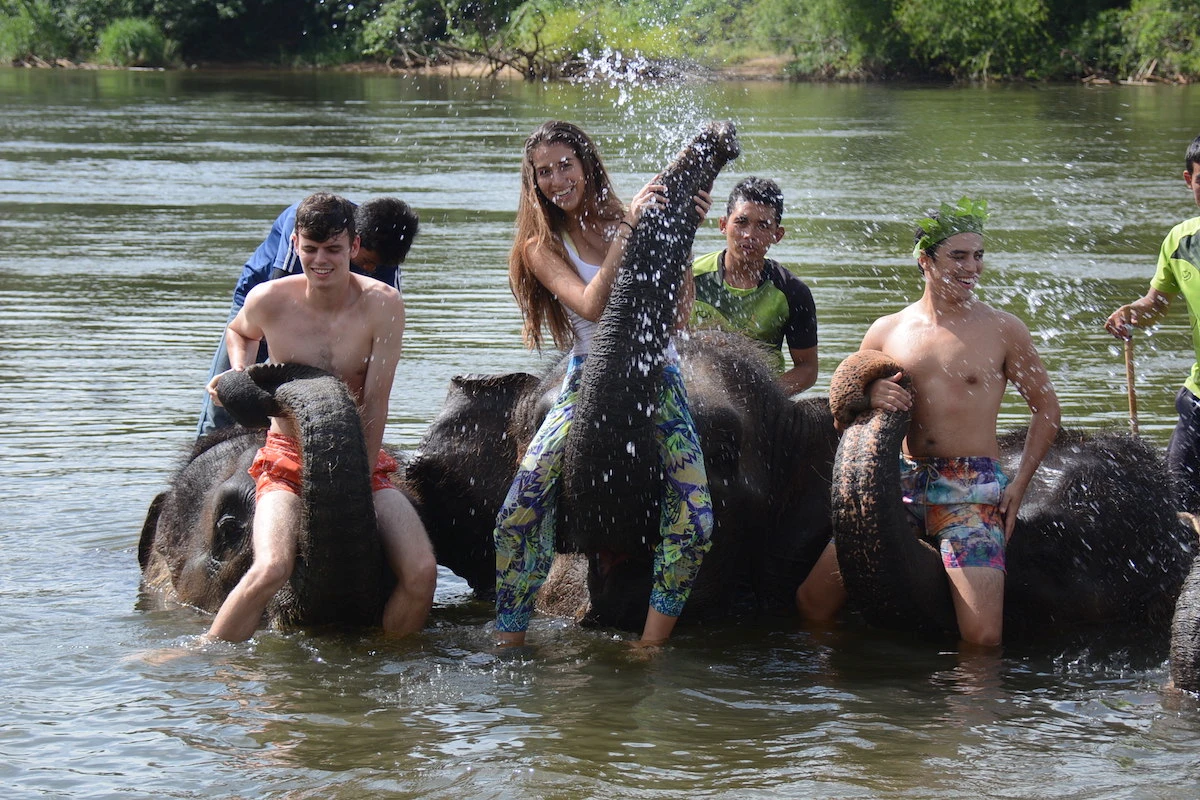
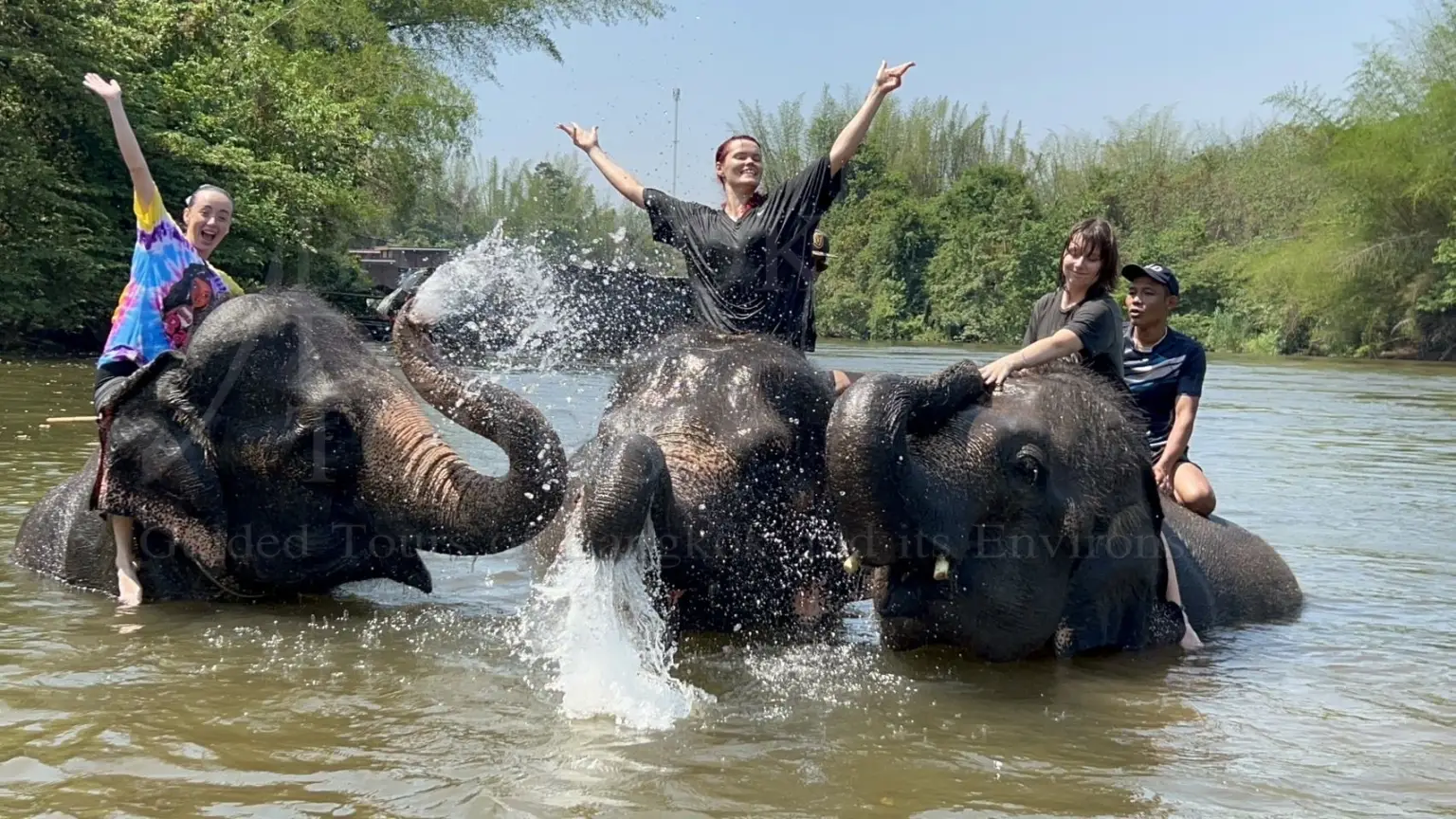
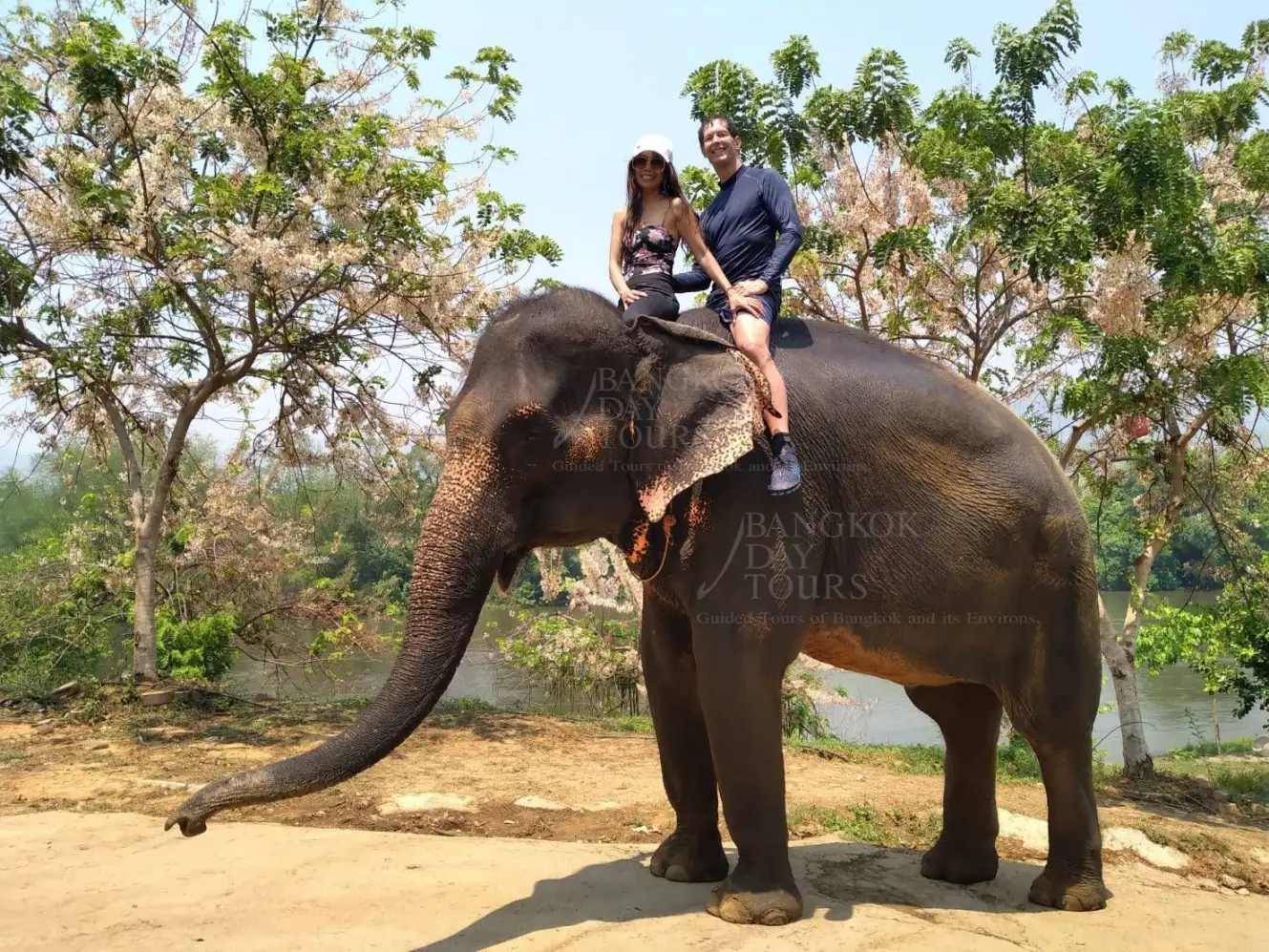
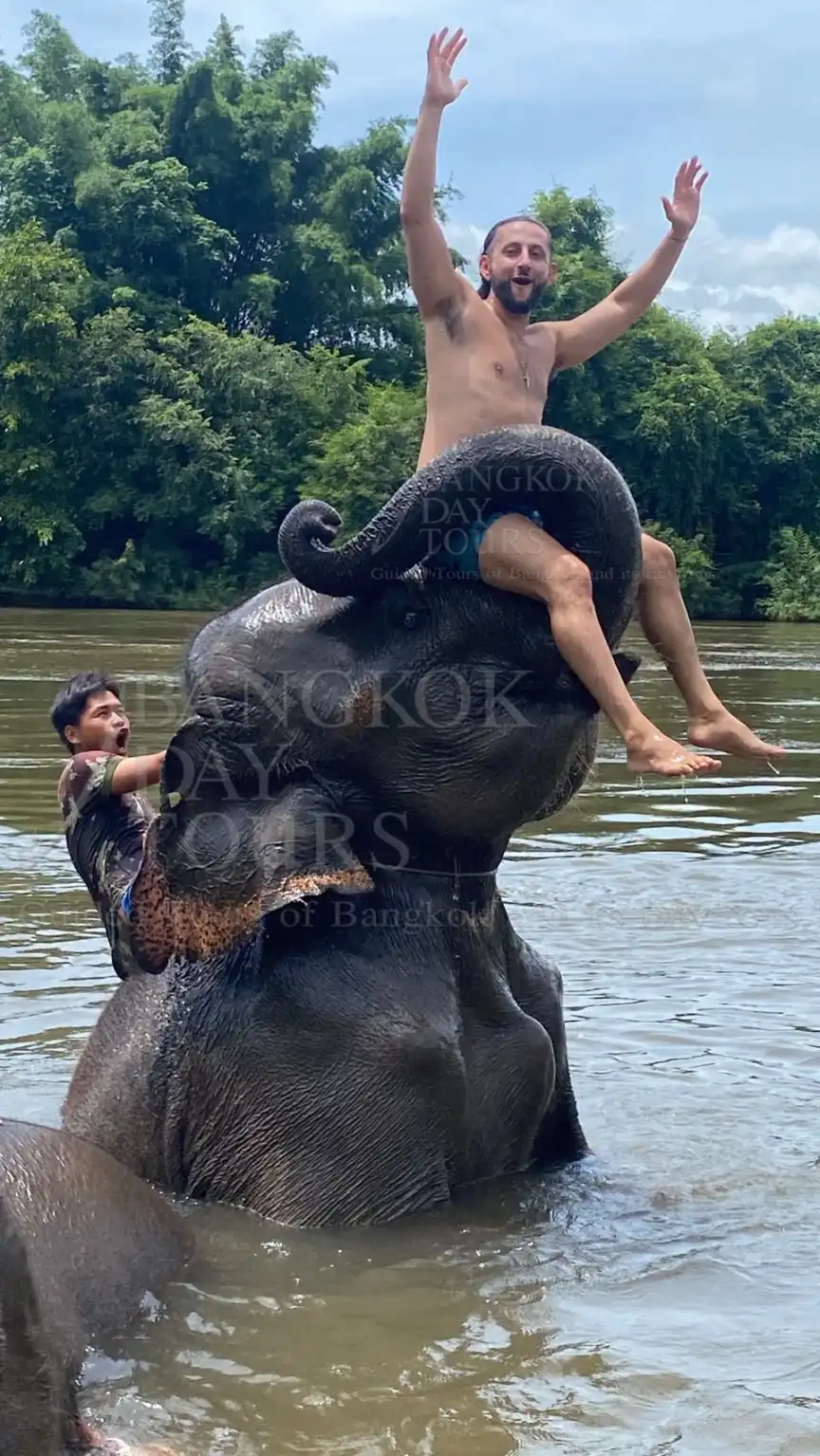
Ride & Bathe Elephants

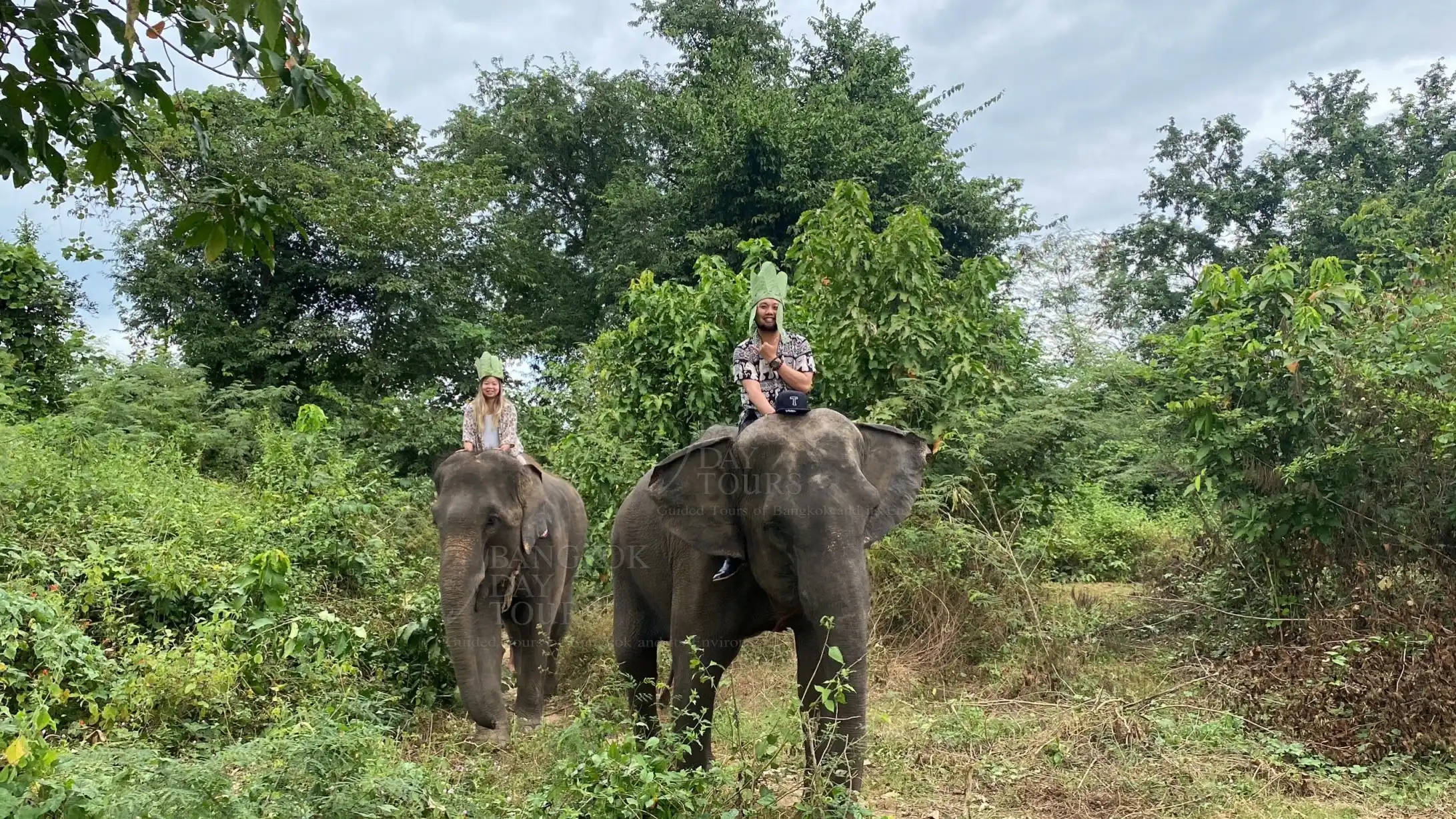
In Thailand, elephants are the most revered of all animals and still play an active part within Thai society and culture.

In the past they have been used at the forefront of battles and in more recent times to assist in the logging trade. Now, visitors have the opportunity to ride and bathe them.

Despite their vast size, elephants are remarkably agile and are particularly adept at negotiating the narrow tracks in the forest. It's a little nerve wracking, especially when they are going downhill and so make sure you hold on tight.

They often pause along the way, bending far out to pluck some tasty morsel, oblivious to you perched high on their back.

The mahout will jump off during your trek and invite you to slide down onto the elephant's neck and take control. Be warned that their hair is prickly so shorts are not the best attire for this experience.

And also you will be able to bathe the elephants in the waters of the local river. You'll get wet, so don't forget your swimmers. We'll provide the life jackets for you if you want.

Important Information

Not every tour includes bathing the elephants. Please check the Tour Programme.

Attractions information

Floating Market Damnoen Saduak

Waterways have always been an integral part of Thai life and many communities depended entirely on them for their daily existence.

Long before cars, boats of all shapes and sizes plied the rivers and canals through the kingdom of Thailand, trading their wares and delivering their supplies.
The Floating Market at Damnoen Saduak is located in Ratchaburi Province which is just over 100 kms or two hours drive from the capital city of Bangkok.

This is a particularly fertile area, being irrigated by a 32 kilometre straight-line canal constructed by King Rama IV way back in 1866.

It connects the Taachin River with the Mae Klong River and became a major transport artery between the provinces of Samut Sakorn and Samut Songkram.

Apart from providing transportation, Damnoen Saduak Canal also provides year-round water, with more than 200 small canals having been dug by farmers to irrigate their land.

The area is famous for the quality of its fruit, namely grapes, mangoes, bananas, oranges, papaya & coconut.

Nowadays, both sides of the canal are densely populated and bright and early every morning vendors from the surrounding area turn up to trade their wares.

Attractions information

Floating Market Damnoen Saduak

Waterways have always been an integral part of Thai life and many communities depended entirely on them for their daily existence.

Long before cars, boats of all shapes and sizes plied the rivers and canals through the kingdom of Thailand, trading their wares and delivering their supplies.
The Floating Market at Damnoen Saduak is located in Ratchaburi Province which is just over 100 kms or two hours drive from the capital city of Bangkok.

This is a particularly fertile area, being irrigated by a 32 kilometre straight-line canal constructed by King Rama IV way back in 1866.

It connects the Taachin River with the Mae Klong River and became a major transport artery between the provinces of Samut Sakorn and Samut Songkram.

Apart from providing transportation, Damnoen Saduak Canal also provides year-round water, with more than 200 small canals having been dug by farmers to irrigate their land.

The area is famous for the quality of its fruit, namely grapes, mangoes, bananas, oranges, papaya & coconut.

Nowadays, both sides of the canal are densely populated and bright and early every morning vendors from the surrounding area turn up to trade their wares.

Kanchanaburi – Floating Market Two Day Tour (Code:LC2111)

Pick a day and people

THB  23,000.00

THB  28,600.00

THB  37,700.00

THB  46,800.00

THB  56,000.00

THB  65,000.00

THB  74,100.00

THB  83,200.00

THB  91,500.00

THB  112,000.00

THB  121,000.00

THB  130,000.00

This tour is exclusive to Laem Chabang Port Cruise Ship Passengers. There are also exclusive tours.

The drive from Laem Chabang Port to Kanchanaburi takes approximately four hours. Highlights of your first day include feeding the tigers, visiting the Bridge over the River Kwai, and riding and bathing elephants. The next day, you will visit the floating market at Damnoen Saduak before returning to the ship.

Do you want your tailor-made tour?

A tailor-made tour is the best kind of independent travel itinerary, designed and arranged just for you and your needs.
All events and activities are part of your very personal, privately guided tour.
Just ask us and we will be happy to make your tour an unforgettable experience. We have been doing this for 25 years and the quality of tailor made tours has never changed.

Request a Custom Tour

Why is a private tour a better choice?

With a private tour, you have the freedom to choose what you want to do and when you want to do it. There is much more room for flexibility and changes to your itinerary at every step of the way because you don't have to consider the needs of other travelers. The flexibility and freedom to make the most of your time is the reason why so many people choose to take a private tour rather than a group tour.

Private Tours vs Join Tours:
Bangkok Day Tours does not run join tours. All our tours are private tours, meaning that the vehicle is for the exclusive use of your group throughout the duration of your tour. This allows you to set your own pace and to move along when you have seen enough. No waiting for the stragglers! The only exception to the ANZAC Day Tours which are run on a join basis in April each year.

Tour Programme

09:00 - Day 1 Departs

09:00 - Pick up dockside Laem Chabang Port

We'll be waiting for you when you get off the ship. Your guide will have a sign with your name on it. The sooner you get off the sooner we can leave.Read More >

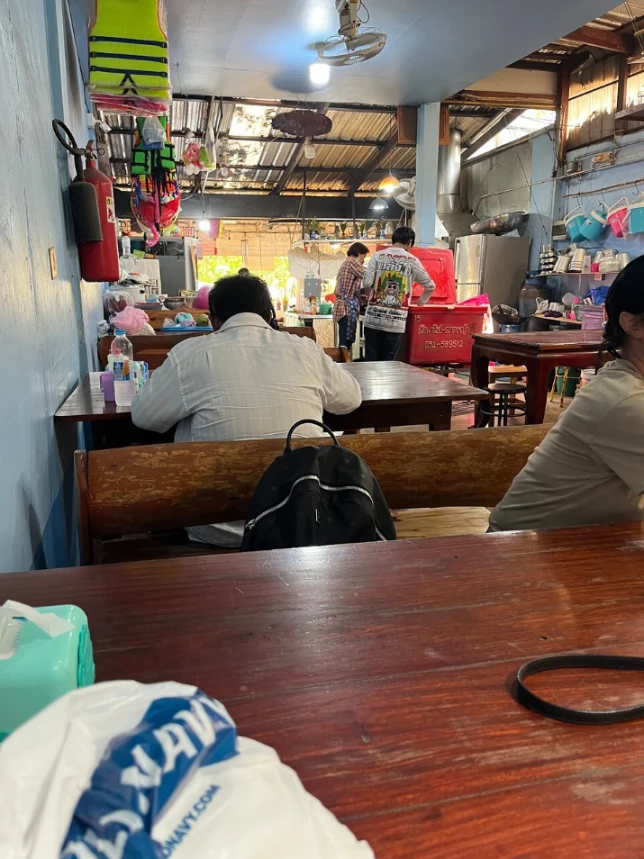
13:30 - Lunch in a Kanchanaburi Provincial Restaurant

Lunch will be served in a local Thai restaurant.Read More >

14:15 - Tiger Cub - Wildlife Sanctuary Safari

You will have the opportunity to feed the tigers in a safe and controlled environment. You will have the opportunity to meet, interact with, and take photographs of the tigers. It is a very rewarding experience to get them to respond to simple commands.Read More >

16:00 - Ride & Bathe Elephants

Fasten your seatbelt and prepare for an unforgettable journey. Riding the elephant is a long way down! When the mahout gets off and invites you to slide down the elephant's neck, you'll have the chance to become the mahout.Read More >

18:00 - Check-in to Local Resort

Late afternoon you will arrive at the resort where you'll stay overnight.

18:30 - Bridge over River Kwai

Before dinner, we're going to see the infamous Bridge over the River Kwai, Take a walk across the bridge, but be careful because there are no safety rails. This is the perfect spot for some great photo ops!

19:00 - Dinner at the Resort

Relax and enjoy the variety of Thai cuisine in the Restaurant at the Resort.

07:00 - Day 2 Departs

07:00 - Depart for Floating Market

You'll need to check-out early and then meet us in the lobby at 7:00am. Today is a full day with lots to see so please don't be late.Read More >

08:30 - Floating Market Damnoen Saduak

The Damnoen Saduak Floating Market is located in Ratchaburi Province, approximately an hour and a half from Kanchanaburi. It's a popular destination known for its traditional trading practices on the canals. You'll have plenty of time to take a boat ride and walk around the main market area.Read More >

10:30 - Depart for Laem Chabang

You can relax in air conditioned comfort while the driver returns you to your ship at Laem Chabang.

15:00 - Arrive back at your ship

We'll stop for a quick lunch on the way back to the ship. You can expect to be back on board by 3:00pm depending on the traffic.
Important Information

Tiger Cubs will be one of a three difference species ‘Leopard, Lion or Tiger cubs’ seasonal. Depend on the time when we’ll visit!

Whilst bathing elephants you will get wet! Come prepared.

Testimonials

Attractions information

Laem Chabang Port

Laem Chabang is Thailand's largest port & is the main container port for Bangkok. It is located two hours to the southeast of Bangkok & about 30 minutes from the resort city of Pattaya.

The larger cruise ships have to dock here because of the shallowness of the Chao Phraya river's Klong Toey Port.
Laem Chabang Port undertook a major program to encourage development outside Bangkok and take advantage of the proximity to the Gulf of Thailand.

Construction began in 1988 and the Laem Chabang container port was completed in 1991.

It's now ranked in the top 20 of the busiest ports in the world. Much of the international shipping reaching Thailand goes through Laem Chabang. The port operates 24 hours a day, 7 days a week, 365 days a year.

As a port town, the economy is based on shipping services, as well as retail and tourism. The town is being marketed as an alternative to seedy Pattaya. Sukhumvit Road goes through the town.

Cruise ships using Laem Chabang Port during the 2009-2010 season include Costa Classica, Cunard's Queen Mary 2 & Queen Victoria, HAL's Amsterdam & Volendam, P&O's Arcadia, Diamond Princess, Ocean Princess & Sun Princess, Regent Seven Seas Mariner, Navigator & Voyager, Royal Caribbean's Legend of the Seas, Silver Sea's Shadow & Whisper and Voyages of Discovery.

Attractions information

Ayutthaya Sacred City

Phra Nakhon Si Ayutthaya "The Sacred City of Ayutthaya" was founded in 1351 and reached its apex in the 16th century. It is an island embraced by three rivers, the Chao Phraya, Lopburi and Pa Sak.

In the Golden Age which lasted 417 years, Ayutthaya was the historic capital of Thailand.
The territory of the Kingdom of Ayutthaya extended far beyond present-day Laos, Cambodia, and Myanmar. During the 17th century, foreign visitors, traders and diplomats alike, claimed Ayutthaya to be the most illustrious and glittering city that they had ever visited. That ended forever in 1767 when it was conquered by the Burmese and completely destroyed.

Nowadays, visitors to Ayutthaya, which is only 86 kilometers north of Bangkok, can marvel at its grandeur reflected through numerous magnificent structures and ruins concentrated in and around the city island. The temple compounds are still awe-inspiring even in disrepair and a visit here is memorable and a good beginning for those drawn to the relics of history.

The architecture of Ayutthaya is a fascinating mix of Khmer, or ancient Cambodian style, and early Sukhothai style.

Most importantly, Phra Nakhon Si Ayutthaya Historical Park, an extensive historical site in the heart of Ayutthaya city, is a UNESCO World Heritage Site.

Attractions information

Wat Mahathat Ayutthaya

Wat Mahathat was built in the early days of Ayutthaya in the late 14th century by King Borommaracha I.

The story goes that the king had a revelation, and relics of the Buddha then suddenly appeared. The temple was built to house the relics.

Wat Mahathat Ayutthaya was built in the early period in 1374. The main stupa is Pang shape made of laterite but in the later periods was resored with brick.

The construction of Wat Mahathat was begun during the reign of King Borommarachathirat I in 1374 A.D. but was completed during the reign of King Ramesuan (1388-1395 A.D.) When King Songtham (1610-1628 A.D.) was in power the main prang (Khmerstyle tower) collapsed. The restoration work on the prang was probably completed in the reign of King Prasatthong (1630-1655 A.D.) During the restoration the height of the prang was considerably increased.

Wat Mahathat was restored once again during the reign of King Borommakot (1732-1758 A.D.) when four porticos of the main prang were added. In 1767 A.D. when Ayutthaya was sacked the wat was burnt and has since then been in ruins.

It is most famous for the Buddha head trapped in the Bodhi Tree.

Attractions information

Ayutthaya Long-tail Boat

Ayutthaya is an island encircled by a confluence of three rivers, the Chao Phraya, Lopburi and Pa Sak and it makes sense to take a local long-tail boat so you can get a different perspective of the city.

Many of the most interesting temples are only accessible from the river so you'll enjoy this.

The Chao Phraya, Lopburi and Pa Sak rivers are teeming with aquatic life and as you cruise you are likely to see a variety of snakes, monitor lizards and plenty of fish in the river. Surprisingly, you'll also see lots of children swimming and mothers doing their laundry on the steps of their houses.

A 17th century Dutch merchant described Ayutthaya as 'a city standing on a small island of the Chao Phraya River. Within the city walls, there are long, straight and wide roads. Canals have been dug from the river into the city, facilitating transportation.

Apart from the main thoroughfares, there are also a multitude of small canals, lanes and walkways. During the high water season, it is possible to paddle boats everywhere, even up to the house steps. Ayutthaya is a riverside city which has been carefully planned. It is truely a beautiful city'.

Attractions information

Wat Pho Reclining Buddha Temple

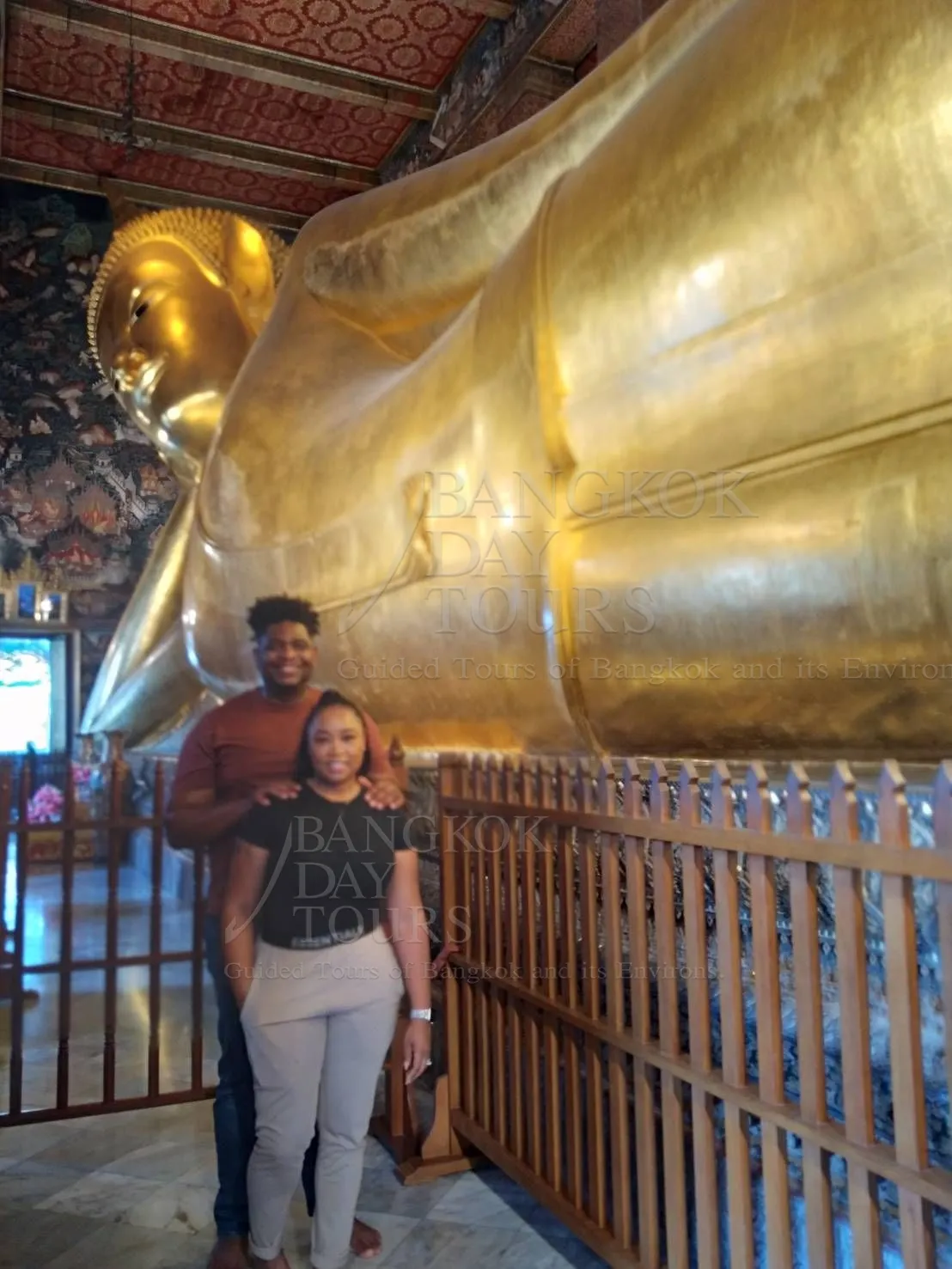
Wat Pho, located next to the Grand Palace, is the one of the largest & oldest temples in Bangkok and is home to more than one thousand Buddha images. The most impressive of which is the huge Reclining Buddha measuring 46 metres long & 15 metres high with mother of pearl inlaid in its eyes & feet.

Wat Phra Chetuphon Vimolmangklararm Rajwaramahaviharn is commonly known as Wat Pho and the temple complex consists of two walled compounds bisected by Soi Chetuphon running east-west.

The northern walled compound is where the Reclining Buddha and famed massage school for the blind are found. If you go for a massage make sure you ask for 'soft'!

The southern walled compound, Tukgawee, is a working Buddhist monastery with monks in residence and a school.

The principal Buddha image is "Phra Buddha Deva Patimakorn" in a gesture of seated Buddha on a three tiered pedestal called Phra Pang Smardhi (Lord Buddha in the posture of concentration), and some ashes of King Rama I are kept under the pedestal.

Made as part of Rama III's restoration, the Reclining Buddha is decorated with gold plating on his body and mother of pearl on his eyes and the soles of his feet. Each foot is 3 metres high & 5 metres long and displays 108 auspicious signs portraying natural scenes of both Indian and Chinese influences.

Attractions information

Grand Palace Bangkok

The Grand Palace is the most spectacular place in Bangkok, so if you only see one thing whilst in the city, this is the place to see.Thai people respectfully refer to it as Phra Borommaharatchawang. It served as the official residence of the King of Thailand from the 18th -20th century.

The Grand Palace complex, construction of which began in 1782 during the reign of King Rama I, sits on the east bank of the Chao Phraya River and is surrounded by a defensive wall 1,900 metres in length, which encloses an area of 218,400 square metres. Within its walls, in times past, were the Thai war ministry, state departments, and even the mint.

Within the palace complex are several impressive buildings including Wat Phra Kaeo or the Temple of the Emerald Buddha, which contains the revered Emerald Buddha that dates back to the 14th century.

Thai Kings stopped living in the palace in the middle of the twentieth century, but the royal residence is still used by visiting dignitaries.

Important Information

A strict dress code applies here. The Grand Palace and The Temple of the Emerald Buddha is Thailand's most sacred site. Visitors must be properly dressed before being allowed entry to the temple. Men must wear long pants and shirts with sleeves. No tank tops or singlets. Women must be similarly modestly dressed. No see-through clothes or bare shoulders. No shorts or tights. Proper shoes must be worn. No flip flops.

Attractions information

Chao Phraya River

The Chao Phraya River is regarded as the bloodline of the Thai people. It has its origins in four rivers flowing from the northern region of the country, the Ping, Wang, Yom and Nan which meet at Pak Nam Pho in Nakhon Sawan Province. The Chao Phraya River is 370 kilometers long.

Much of Thai history can be traced along the banks of the Chao Phraya River, because in the early days Thai people settled along the river banks and only with the advent of roads in recent times have they ventured further away.

Today the Chao Phraya River remains the most important waterway for the people of central Thailand.

It is a working river, with daily commuter boats plying up and down from Nonthaburi to Sathorn covering 31 piers along the way.

Tug boats towing three or four barges laden with sand are frequently seen as they make their way to the various construction sites down river.

In the evening, as dusk gives way to night, many dinner cruise boats take their place on the river, going up as far as the Rama VIII bridge and downstream to the Rama IX bridge.

The Chao Phraya River is vibrantly interesting in the daytime and romantically beautiful at night.

Ayutthaya – Bangkok Two Days (Code:LC2109)

Pick a day and people

THB  21,900.00

THB  27,900.00

THB  29,900.00

THB  32,900.00

THB  35,900.00

THB  38,900.00

THB  42,900.00

THB  47,900.00

THB  52,900.00

THB  71,800.00

THB  74,800.00

THB  77,800.00

This tour is exclusive to Laem Chabang Port Cruise Ship Passengers.

The World Heritage Site of Ayutthaya offers a glimpse into what must have been a magnificent city during its four hundred years as the capital of Siam. Bangkok, the present capital, boasts the beautiful Grand Palace and Wat Phra Kaeo, as well as Wat Po with its Reclining Buddha and Wat Arun on the Chao Phraya River.

Do you want your tailor-made tour?

A tailor-made tour is the best kind of independent travel itinerary, designed and arranged just for you and your needs.
All events and activities are part of your very personal, privately guided tour.
Just ask us and we will be happy to make your tour an unforgettable experience. We have been doing this for 25 years and the quality of tailor made tours has never changed.

Request a Custom Tour

Why is a private tour a better choice?

With a private tour, you have the freedom to choose what you want to do and when you want to do it. There is much more room for flexibility and changes to your itinerary at every step of the way because you don't have to consider the needs of other travelers. The flexibility and freedom to make the most of your time is the reason why so many people choose to take a private tour rather than a group tour.

Private Tours vs Join Tours:
Bangkok Day Tours does not run join tours. All our tours are private tours, meaning that the vehicle is for the exclusive use of your group throughout the duration of your tour. This allows you to set your own pace and to move along when you have seen enough. No waiting for the stragglers! The only exception to the ANZAC Day Tours which are run on a join basis in April each year.

Tour Programme

09:00 - Day 1 Depart

09:00 - Pick up dockside Laem Chabang Port

We'll be waiting for you when you get off the ship. Your guide will have a sign with your name on it. The sooner you get off the sooner we can leave. Read More >

11:30 - Arrive at Sacred City of Ayutthaya

The journey from Laem Chabang to Ayutthaya takes approximately two and a half hours. Upon your arrival, you will have the opportunity to explore the ancient ruins located within the main city.Read More >

12:15 - Lunch in a Thai Restaurant

Lunch will be served in a local Thai restaurant

13:00 - Wat Mahathat & Wat Lokayasutharam

These are the two best temples in Ayutthaya and each one has its own unique characteristics. Wat Mahathat and Wat Phra Si Sanphet are the two best temples in Ayutthaya, each with its own unique characteristics. Wat Mahathat is the headquarters of Thailand's largest monastic order. It is also an important center for the study of Buddhism and meditation and faces east. Wat Lokayasutharam features a significant reclining Buddha image known as Phra Bhuddhasaiyart. The structure was built using a combination of bricks and cement, a common construction method in Thai art. The 37-meter-long Reclining Buddha is all that remains of the former royal temple. The Buddha's head, measuring 8 meters in height, is currently in repose.Read More >

15:00 - Long-tail Boat Trip

n the mid-afternoon, you can take a long-tail boat trip. The trip will be around the island of Ayutthaya.Read More >

16:30 - Depart for Bangkok

You can relax in air conditioned comfort while the driver takes you to your hotel in Bangkok.

18:30 - Arrive at your hotel in Bangkok

You can expect to be in your hotel around 6:00pm depending on the traffic. Please remember that your overnight accommodation and dinner are not included in the tour cost.
08:00 - Day 2 Departs.

08:00 - Pick up from your hotel

You'll need to check-out early and then meet us in the lobby at 8:00am. Today is a full day with lots to see so please don't be late.

08:45 - Wat Pho Reclining Buddha Temple

Wat Pho is a temple complex housing the largest collection of Buddha images in Thailand. These images include the huge, 46-meter-long Reclining Buddha. Wat Pho is considered Thailand's first university and is home to the famous Reclining Buddha.Read More >

10:00 - Grand Palace Wat Phra Kaeo

The Grand Palace incorporates Wat Phra Kaew, or the Temple of the Emerald Buddha, which is Thailand's most revered temple. Please dress accordingly.Read More >

12:45 - Lunch in Thai Restaurant

Lunch will be in a Thai restaurant beside the Chao Phraya RiverRead More >

13:30 - Depart for Laem Chabang

You can relax in air conditioned comfort while the driver returns you to your ship at Laem Chabang.

15:30 - Arrive back at your ship

You can expect to be back on board by 3:30pm depending on the traffic.
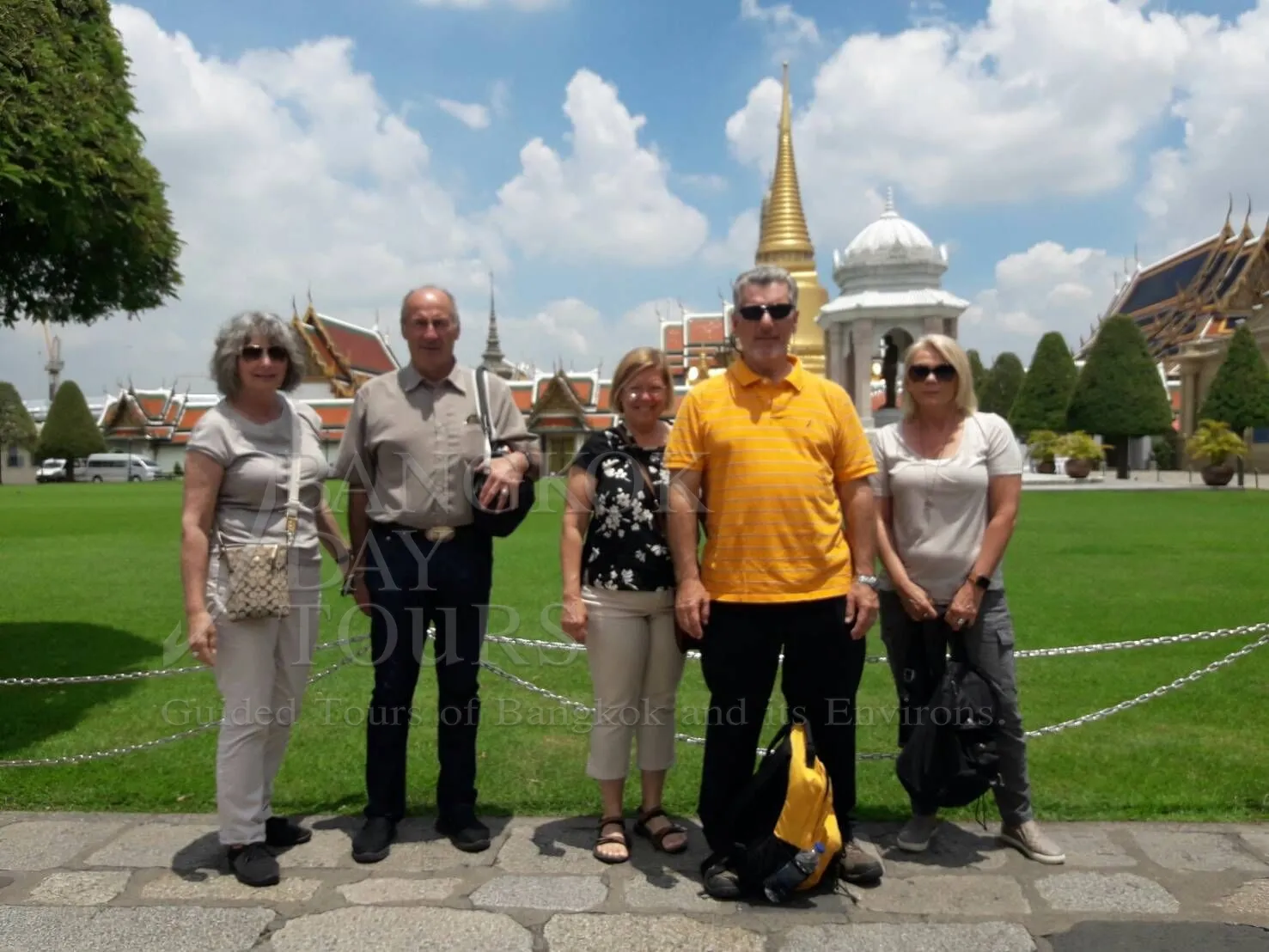
Important Information


A strict dress code applies at The Grand Palace and The Temple of the Emerald Buddha which are Thailand’s most sacred site. Visitors must be properly dressed before being allowed entry to the temple. Men must wear long pants and shirts with sleeves. No tank tops or singlets. Women must be similarly modestly dressed. No see-through clothes or bare shoulders. No shorts or tights. Proper shoes must be worn. No flip flops.

Testimonials

Attractions information

Laem Chabang Port

Laem Chabang is Thailand's largest port & is the main container port for Bangkok. It is located two hours to the southeast of Bangkok & about 30 minutes from the resort city of Pattaya.

The larger cruise ships have to dock here because of the shallowness of the Chao Phraya river's Klong Toey Port.
Laem Chabang Port undertook a major program to encourage development outside Bangkok and take advantage of the proximity to the Gulf of Thailand.

Construction began in 1988 and the Laem Chabang container port was completed in 1991.

It's now ranked in the top 20 of the busiest ports in the world. Much of the international shipping reaching Thailand goes through Laem Chabang. The port operates 24 hours a day, 7 days a week, 365 days a year.

As a port town, the economy is based on shipping services, as well as retail and tourism. The town is being marketed as an alternative to seedy Pattaya. Sukhumvit Road goes through the town.

Cruise ships using Laem Chabang Port during the 2009-2010 season include Costa Classica, Cunard's Queen Mary 2 & Queen Victoria, HAL's Amsterdam & Volendam, P&O's Arcadia, Diamond Princess, Ocean Princess & Sun Princess, Regent Seven Seas Mariner, Navigator & Voyager, Royal Caribbean's Legend of the Seas, Silver Sea's Shadow & Whisper and Voyages of Discovery.

Attractions information

Grand Palace Bangkok

The Grand Palace is the most spectacular place in Bangkok, so if you only see one thing whilst in the city, this is the place to see.Thai people respectfully refer to it as Phra Borommaharatchawang. It served as the official residence of the King of Thailand from the 18th -20th century.

The Grand Palace complex, construction of which began in 1782 during the reign of King Rama I, sits on the east bank of the Chao Phraya River and is surrounded by a defensive wall 1,900 metres in length, which encloses an area of 218,400 square metres. Within its walls, in times past, were the Thai war ministry, state departments, and even the mint.

Within the palace complex are several impressive buildings including Wat Phra Kaeo or the Temple of the Emerald Buddha, which contains the revered Emerald Buddha that dates back to the 14th century.

Thai Kings stopped living in the palace in the middle of the twentieth century, but the royal residence is still used by visiting dignitaries.

Important Information

A strict dress code applies here. The Grand Palace and The Temple of the Emerald Buddha is Thailand's most sacred site. Visitors must be properly dressed before being allowed entry to the temple. Men must wear long pants and shirts with sleeves. No tank tops or singlets. Women must be similarly modestly dressed. No see-through clothes or bare shoulders. No shorts or tights. Proper shoes must be worn. No flip flops.

Attractions information

Chao Phraya River

The Chao Phraya River is regarded as the bloodline of the Thai people. It has its origins in four rivers flowing from the northern region of the country, the Ping, Wang, Yom and Nan which meet at Pak Nam Pho in Nakhon Sawan Province. The Chao Phraya River is 370 kilometers long.

Much of Thai history can be traced along the banks of the Chao Phraya River, because in the early days Thai people settled along the river banks and only with the advent of roads in recent times have they ventured further away.

Today the Chao Phraya River remains the most important waterway for the people of central Thailand.

It is a working river, with daily commuter boats plying up and down from Nonthaburi to Sathorn covering 31 piers along the way.

Tug boats towing three or four barges laden with sand are frequently seen as they make their way to the various construction sites down river.

In the evening, as dusk gives way to night, many dinner cruise boats take their place on the river, going up as far as the Rama VIII bridge and downstream to the Rama IX bridge.

The Chao Phraya River is vibrantly interesting in the daytime and romantically beautiful at night.

Attractions information

Bangkok Noi Canals

Bangkok has often been called the Venice of East, but over time many of the canals in the city have been filled in to make roads, so it is nice that this part of the city has retained the charm of living along the banks of serene canals. Take a long-tail boat and explore the myriad waterways.

Bangkok Noi Canal flows in a horseshoe shape through the old Bangkok Noi community in the Thonburi area.

The community was established in the Ayutthaya Period and King Chai Racha Dhiraj (1534-1546) commanded the excavation of a waterway from Bangkok Noi Canal to Bangkok Yai Canal as a shortcut to facilitate transport and communications.

Along both banks of the Bangkok Noi Canal, visitors see places of cultural and historical significance. On a boat trip you can pass the Thonburi railway station and the Royal Barges Museum. The boat trip also takes in several major temples and traditional Thai houses with carved designs.

Although cargo boats now use the direct route along the Chao Phraya River, the lively Bangkok Noi Canal community still endures. It reflects a bygone Thai lifestyle, inextricably related with waterways, and a Thai identity handed down from generation to generation.

Attractions information

Sanctuary of Truth

The Sanctuary of Truth is one of the most notable attractions in Chonburi Province but is largely ignored by the traveling masses.

This remarkable structure, which is equivalent height of a twenty-story building, has been constructed in traditional Thai style entirely without the use of any nails.

Using Thai building methods from a bygone era, The Sanctuary of Truth is held together by wooden pegs and is ornately carved to show the relationships between human beings and the universe according to Eastern philosophies.

On arrival, you'll be introduced to a more leisurely method of transport, as you climb into the pony & trap for your journey down to The Sanctuary of Truth itself. The first glimpse from above is most memorable and whets the appetite for a closer view.

Inside the building it's remarkably cool and you'll be amazed by the myriad of intricate carvings which are visible everywhere. The timber used in the construction is suitably aged, having been taken from dismantled buildings throughout the country.

In addition to The Sanctuary of Truth itself, there is an excellent Thai Cultural Show which includes Thai dancing, Traditional fighting, Thai boxing and a Dolphin Show. Here you can even swim with the dolphins if you come prepared.

Bangkok Chonburi Two Days  (Code:LC2108)

Pick a day and people

THB  21,900.00

THB  27,400.00

THB  30,400.00

THB  34,200.00

THB  37,400.00

THB  41,700.00

THB  45,500.00

THB  49,400.00

THB  53,200.00

THB  74,800.00

THB  79,100.00

THB  83,400.00

This tour is exclusive to Laem Chabang Port Cruise Ship Passengers.

Laem Chabang-Bangkok is 2 hours and the highlight today will be the Grand Palace & Wat Phra Kaeo. You'll also take a long-tail boat on the Chao Phraya river to Wat Arun. Next day you'll visit the Sanctuary of Truth and Nong Nooch Tropical Gardens before returning to the ship.

Do you want your tailor-made tour?

A tailor-made tour is the best kind of independent travel itinerary, designed and arranged just for you and your needs.
All events and activities are part of your very personal, privately guided tour.
Just ask us and we will be happy to make your tour an unforgettable experience. We have been doing this for 25 years and the quality of tailor made tours has never changed.

Request a Custom Tour

Why is a private tour a better choice?

With a private tour, you have the freedom to choose what you want to do and when you want to do it. There is much more room for flexibility and changes to your itinerary at every step of the way because you don't have to consider the needs of other travelers. The flexibility and freedom to make the most of your time is the reason why so many people choose to take a private tour rather than a group tour.

Private Tours vs Join Tours:
Bangkok Day Tours does not run join tours. All our tours are private tours, meaning that the vehicle is for the exclusive use of your group throughout the duration of your tour. This allows you to set your own pace and to move along when you have seen enough. No waiting for the stragglers! The only exception to the ANZAC Day Tours which are run on a join basis in April each year.

Tour Programme

09:00 - Day 1 Departs.

09:00 - Pick up dockside Laem Chabang Port

We'll be waiting for you when you get off the ship. Your guide will have a sign with your name on it. The sooner you get off the sooner we can leave.Read More >

11:00 - Grand Palace Wat Phra Kaeo

The Grand Palace incorporates Wat Phra Kaeo or the Temple of the Emerald Buddha which is Thailand's most revered temple. Read More >

13:00 - Lunch in a Thai Restaurant

Lunch will be served in a local Thai restaurant beside the Chao Phraya river.Read More >

14:00 - Long-tail Boat Trip

Enjoy the long-tail boat trip on the river and into the canal system on the Thonburi side. And we will stop Wat Arun "the royal temple of King Rama II" or Temple of Dawn.Read More >

16:30 - Check-in to your Bangkok Hotel

You can expect to be in your hotel around 4:30pm depending on the traffic. Please remember that your overnight accommodation and dinner are not included in the tour cost.
07:00 - Day 2 Departs

07:00 - Pick up from your hotel

You'll need to check-out early and then meet us in the lobby at 7:00am. Today is a full day with lots to see so please don't be late.

09:00 - Sanctuary of Truth

We'll stop at The Sanctuary of Truth on our way into the city of Pattaya.Read More >

11:00 - Nong Nooch Tropical gardens

The grounds are huge so take your time. During the day there is a cultural show and sometime you can have lunch as well.

15:00 - Depart for Laem Chabang

You can relax in air conditioned comfort while the driver returns you to your ship at Laem Chabang

16:00 - Arrive back at your ship

You can expect to be back on board by 4:00pm.

Important Information

A strict dress code applies at The Grand Palace and The Temple of the Emerald Buddha which are Thailand’s most sacred site. Visitors must be properly dressed before being allowed entry to the temple. Men must wear long pants and shirts with sleeves. No tank tops or singlets. Women must be similarly modestly dressed. No see-through clothes or bare shoulders. No shorts or tights. Proper shoes must be worn. No flip flops.

Testimonials

Attractions information

Laem Chabang Port

Laem Chabang is Thailand's largest port & is the main container port for Bangkok. It is located two hours to the southeast of Bangkok & about 30 minutes from the resort city of Pattaya.

The larger cruise ships have to dock here because of the shallowness of the Chao Phraya river's Klong Toey Port.
Laem Chabang Port undertook a major program to encourage development outside Bangkok and take advantage of the proximity to the Gulf of Thailand.

Construction began in 1988 and the Laem Chabang container port was completed in 1991.

It's now ranked in the top 20 of the busiest ports in the world. Much of the international shipping reaching Thailand goes through Laem Chabang. The port operates 24 hours a day, 7 days a week, 365 days a year.

As a port town, the economy is based on shipping services, as well as retail and tourism. The town is being marketed as an alternative to seedy Pattaya. Sukhumvit Road goes through the town.

Cruise ships using Laem Chabang Port during the 2009-2010 season include Costa Classica, Cunard's Queen Mary 2 & Queen Victoria, HAL's Amsterdam & Volendam, P&O's Arcadia, Diamond Princess, Ocean Princess & Sun Princess, Regent Seven Seas Mariner, Navigator & Voyager, Royal Caribbean's Legend of the Seas, Silver Sea's Shadow & Whisper and Voyages of Discovery.

Attractions information

Kanchanaburi Province

Kanchanaburi Province which borders Myanmar (Burma) to the north-west is the third largest Thailand's of seventy six provinces.

It is located 130 km west of Bangkok and has a population of about 735,000 of which 54,000 live in Kanchanaburi town itself. This is a most picturesque part of Thailand.

Kanchanaburi town was originally established by King Rama I as a first line of defence against the Burmese, who might use the old invasion route through the Three Pagodas Pass on the Thai-Burma border.

The magnificent landscape & charming beauty of Kanchanaburi have resulted in major tourist attractions including the well-known Erawan Waterfalls, caves which were once inhabited by Neolithic man, pristine national parks, tranquil rivers, virgin forests, and reservoir.

Together, they offer an intriguing experience whether you are visiting for the first-time or returning for another visit.

Whatever your personal interest: fishing, rafting, canoeing, mountain biking, bird-watching, star-gazing, golfing, elephants, tigers, jungle trekking or even living on bamboo rafts, Kanchanaburi takes pride in offering them all.

Local residents of Kanchanaburi are engaged in agricultural activities as this is one of the most fertile provinces. Most of the locals are of Thai ancestry with notable Mon and Karen minorities.

Attractions information

Tiger Cubs @ Wildlife Sanctuary Safari

The tiger (Panthera tigris) is the largest cat species. The species is classified in the genus Panthera with the lion, leopard, jaguar and snow leopard. (we will feed the Tiger, age less than one year)

Attractions information

Ride Elephants

In Thailand, elephants are the most revered of all animals and still play an active part within Thai society and culture.

In the past they have been used at the forefront of battles and in more recent times to assist in the logging trade. Now, visitors have the opportunity to ride them.

Despite their vast size, elephants are remarkably agile and are particularly adept at negotiating the narrow tracks in the forest. It's a little nerve wracking, especially when they are going downhill and so make sure you hold on tight.

They often pause along the way, bending far out to pluck some tasty morsel, oblivious to you perched high on their back.

Attractions information

Bridge over the River Kwai

The Bridge over the River Kwai was built during World War II for the Japanese Army using Allied POWs.

Altogether, 61,700 British, American, Australian, Dutch and New Zealand soldiers and a large number of Chinese, Vietnamese, Japanese, Malaysian, Thai, Burmese and Indian labourers were involved.
Two bridges were actually built side by side. A wooden trestle bridge, which is no longer there, was completed in February 1943 and an eleven span steel bridge completed in April 1943.

This bridge had been dismantled by the Japanese and brought to Kanchanaburi from Java in 1942. The central spans were destroyed by Allied bombings and rebuilt by British Army Engineers immediately after the war.

It was part of the strategic railway linking Thailand with Burma. During the construction of the bridge over the Khwae Yai River - River Kwai as it is known among foreigners - the brutalities of war, disease and starvation claimed thousands of POWs lives.

The bridge was immortalised in the book by Pierre Boulle entitled The Bridge Over The River Kwai and later in the movie of the same name. Unfortunately, he had never been to Kanchanaburi or he would have known that the railway does not cross the River Kwai. It actually crosses the Mae Klong River, so the Thai authorities simply renamed the river to aid tourism!

Attractions information

Grand Palace Bangkok

The Grand Palace is the most spectacular place in Bangkok, so if you only see one thing whilst in the city, this is the place to see.Thai people respectfully refer to it as Phra Borommaharatchawang. It served as the official residence of the King of Thailand from the 18th -20th century.

The Grand Palace complex, construction of which began in 1782 during the reign of King Rama I, sits on the east bank of the Chao Phraya River and is surrounded by a defensive wall 1,900 metres in length, which encloses an area of 218,400 square metres. Within its walls, in times past, were the Thai war ministry, state departments, and even the mint.

Within the palace complex are several impressive buildings including Wat Phra Kaeo or the Temple of the Emerald Buddha, which contains the revered Emerald Buddha that dates back to the 14th century.

Thai Kings stopped living in the palace in the middle of the twentieth century, but the royal residence is still used by visiting dignitaries.

Important Information

A strict dress code applies here. The Grand Palace and The Temple of the Emerald Buddha is Thailand's most sacred site. Visitors must be properly dressed before being allowed entry to the temple. Men must wear long pants and shirts with sleeves. No tank tops or singlets. Women must be similarly modestly dressed. No see-through clothes or bare shoulders. No shorts or tights. Proper shoes must be worn. No flip flops.

Attractions information

Grand Palace Bangkok

The Grand Palace is the most spectacular place in Bangkok, so if you only see one thing whilst in the city, this is the place to see.Thai people respectfully refer to it as Phra Borommaharatchawang. It served as the official residence of the King of Thailand from the 18th -20th century.

The Grand Palace complex, construction of which began in 1782 during the reign of King Rama I, sits on the east bank of the Chao Phraya River and is surrounded by a defensive wall 1,900 metres in length, which encloses an area of 218,400 square metres. Within its walls, in times past, were the Thai war ministry, state departments, and even the mint.

Within the palace complex are several impressive buildings including Wat Phra Kaeo or the Temple of the Emerald Buddha, which contains the revered Emerald Buddha that dates back to the 14th century.

Thai Kings stopped living in the palace in the middle of the twentieth century, but the royal residence is still used by visiting dignitaries.

Important Information

A strict dress code applies here. The Grand Palace and The Temple of the Emerald Buddha is Thailand's most sacred site. Visitors must be properly dressed before being allowed entry to the temple. Men must wear long pants and shirts with sleeves. No tank tops or singlets. Women must be similarly modestly dressed. No see-through clothes or bare shoulders. No shorts or tights. Proper shoes must be worn. No flip flops.

Attractions information

Chao Phraya River

The Chao Phraya River is regarded as the bloodline of the Thai people. It has its origins in four rivers flowing from the northern region of the country, the Ping, Wang, Yom and Nan which meet at Pak Nam Pho in Nakhon Sawan Province. The Chao Phraya River is 370 kilometers long.

Much of Thai history can be traced along the banks of the Chao Phraya River, because in the early days Thai people settled along the river banks and only with the advent of roads in recent times have they ventured further away.

Today the Chao Phraya River remains the most important waterway for the people of central Thailand.

It is a working river, with daily commuter boats plying up and down from Nonthaburi to Sathorn covering 31 piers along the way.

Tug boats towing three or four barges laden with sand are frequently seen as they make their way to the various construction sites down river.

In the evening, as dusk gives way to night, many dinner cruise boats take their place on the river, going up as far as the Rama VIII bridge and downstream to the Rama IX bridge.

The Chao Phraya River is vibrantly interesting in the daytime and romantically beautiful at night.

Kanchanaburi – Bangkok Two Days  (Code:LC2107)

Pick a day and people

THB  30,900.00

THB  30,900.00

THB  39,900.00

THB  48,900.00

THB  58,900.00

THB  68,900.00

THB  77,900.00

THB  87,900.00

THB  96,900.00

THB  117,900.00

THB  127,900.00

THB  137,900.00

This tour is exclusive to Laem Chabang Port Cruise Ship Passengers.

Laem Chabang Port to Kanchanaburi is four hours drive. The Tiger Temple, Bridge over the River Kwai, Riding & Bathing Elephants are highlights of your first day. The next day, in Bangkok, we'll go to the splendid Grand Palace and Wat Phra Kaeo, have lunch riverside & then back to the ship.

Do you want your tailor-made tour?

A tailor-made tour is the best kind of independent travel itinerary, designed and arranged just for you and your needs.
All events and activities are part of your very personal, privately guided tour.
Just ask us and we will be happy to make your tour an unforgettable experience. We have been doing this for 25 years and the quality of tailor made tours has never changed.

Request a Custom Tour

Why is a private tour a better choice?

With a private tour, you have the freedom to choose what you want to do and when you want to do it. There is much more room for flexibility and changes to your itinerary at every step of the way because you don't have to consider the needs of other travelers. The flexibility and freedom to make the most of your time is the reason why so many people choose to take a private tour rather than a group tour.

Private Tours vs Join Tours:
Bangkok Day Tours does not run join tours. All our tours are private tours, meaning that the vehicle is for the exclusive use of your group throughout the duration of your tour. This allows you to set your own pace and to move along when you have seen enough. No waiting for the stragglers! The only exception to the ANZAC Day Tours which are run on a join basis in April each year.

Tour Programme

09:00 - Day 1 Departs

09:00 - Pick up dockside Laem Chabang Port

We'll be waiting for you when you get off the ship. Your guide will have a sign with your name on it. The sooner you get off the sooner we can leave.Read More >

13:30 - Lunch in a Kanchanaburi Provincial Restaurant

Lunch will be served in a local Thai restaurant Read More >

14:15 - Tiger Cub - Wildlife Sanctuary Safari

You'll be able to feed the tigers. Getting them to respond to simple commands is a very rewarding experience.Read More >

16:00 - Elephant Ride

When you ride the elephant be sure to fasten your seat belt because it's a long way down. You'll get the change to be the mahout when he gets off and invites you to slide down on the elephant's neck.Read More >

18:00 - Check-in to Local Resort

Late afternoon you will arrive at the resort where you'll stay overnight.

18:30 - Bridge over River Kwai

Before dinner we'll go to see the infamous Bridge over the River Kwai. You can take a walk across the bridge, but be careful because there are no safety rails. Great photo ops here.Read More >

19:00 - Dinner at Riverside Restaurant

Relax and enjoy the variety of Thai cuisine in the Restaurant at the Resort.

07:00 - Day 2 Departs.

07:00 - Depart for Bangkok

You'll need to check-out early and then meet us in the lobby at 7:00am. Today is a full day with lots to see so please don't be late.Read More >

09:30 - Grand Palace Wat Phra Kaeo

The Grand Palace incorporates Wat Phra Kaeo or the Temple of the Emerald Buddha which is Thailand's most revered temple. Please dress accordingly.Read More >

11:45 - Lunch in Thai Restaurant

Lunch will be in a Thai restaurant beside the Chao Phraya River Read More >

13:00 - Depart for Laem Chabang

You can relax in air conditioned comfort while the driver returns you to your ship at Laem Chabang.

15:00 - Arrive back at your ship

You can expect to be back on board by 3:00pm depending on the traffic. If you need to be back earlier the itinerary can be arranged to suit.
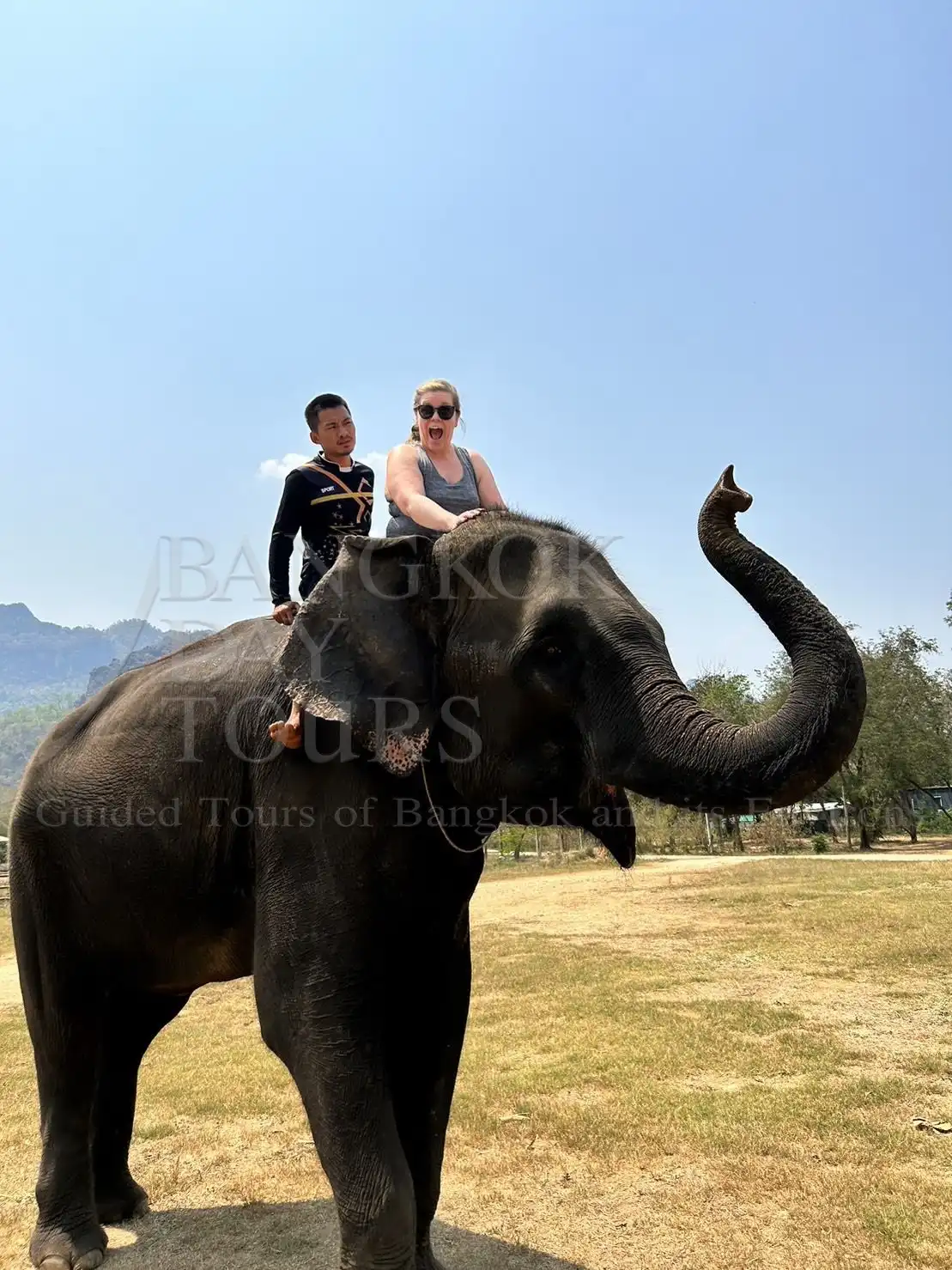
Important Information

Tiger Cubs will be one of a three difference species ‘Leopard, Lion or Tiger cubs’ seasonal. Depend on the time when we’ll visit!

A strict dress code applies at The Grand Palace. Men must wear long pants and shirts with sleeves. No tank tops or singlets. Women must be similarly modestly dressed. No see-through clothes or bare shoulders. No shorts or tights. Proper shoes must be worn. No flip flops.

Testimonials

Attractions information

Laem Chabang Port

Laem Chabang is Thailand's largest port & is the main container port for Bangkok. It is located two hours to the southeast of Bangkok & about 30 minutes from the resort city of Pattaya.

The larger cruise ships have to dock here because of the shallowness of the Chao Phraya river's Klong Toey Port.
Laem Chabang Port undertook a major program to encourage development outside Bangkok and take advantage of the proximity to the Gulf of Thailand.

Construction began in 1988 and the Laem Chabang container port was completed in 1991.

It's now ranked in the top 20 of the busiest ports in the world. Much of the international shipping reaching Thailand goes through Laem Chabang. The port operates 24 hours a day, 7 days a week, 365 days a year.

As a port town, the economy is based on shipping services, as well as retail and tourism. The town is being marketed as an alternative to seedy Pattaya. Sukhumvit Road goes through the town.

Cruise ships using Laem Chabang Port during the 2009-2010 season include Costa Classica, Cunard's Queen Mary 2 & Queen Victoria, HAL's Amsterdam & Volendam, P&O's Arcadia, Diamond Princess, Ocean Princess & Sun Princess, Regent Seven Seas Mariner, Navigator & Voyager, Royal Caribbean's Legend of the Seas, Silver Sea's Shadow & Whisper and Voyages of Discovery.

Attractions information

Bridge over the River Kwai

The Bridge over the River Kwai was built during World War II for the Japanese Army using Allied POWs.

Altogether, 61,700 British, American, Australian, Dutch and New Zealand soldiers and a large number of Chinese, Vietnamese, Japanese, Malaysian, Thai, Burmese and Indian labourers were involved.
Two bridges were actually built side by side. A wooden trestle bridge, which is no longer there, was completed in February 1943 and an eleven span steel bridge completed in April 1943.

This bridge had been dismantled by the Japanese and brought to Kanchanaburi from Java in 1942. The central spans were destroyed by Allied bombings and rebuilt by British Army Engineers immediately after the war.

It was part of the strategic railway linking Thailand with Burma. During the construction of the bridge over the Khwae Yai River - River Kwai as it is known among foreigners - the brutalities of war, disease and starvation claimed thousands of POWs lives.

The bridge was immortalised in the book by Pierre Boulle entitled The Bridge Over The River Kwai and later in the movie of the same name. Unfortunately, he had never been to Kanchanaburi or he would have known that the railway does not cross the River Kwai. It actually crosses the Mae Klong River, so the Thai authorities simply renamed the river to aid tourism!

Attractions information

Kanchanaburi Province

Kanchanaburi Province which borders Myanmar (Burma) to the north-west is the third largest Thailand's of seventy six provinces.

It is located 130 km west of Bangkok and has a population of about 735,000 of which 54,000 live in Kanchanaburi town itself. This is a most picturesque part of Thailand.

Kanchanaburi town was originally established by King Rama I as a first line of defence against the Burmese, who might use the old invasion route through the Three Pagodas Pass on the Thai-Burma border.

The magnificent landscape & charming beauty of Kanchanaburi have resulted in major tourist attractions including the well-known Erawan Waterfalls, caves which were once inhabited by Neolithic man, pristine national parks, tranquil rivers, virgin forests, and reservoir.

Together, they offer an intriguing experience whether you are visiting for the first-time or returning for another visit.

Whatever your personal interest: fishing, rafting, canoeing, mountain biking, bird-watching, star-gazing, golfing, elephants, tigers, jungle trekking or even living on bamboo rafts, Kanchanaburi takes pride in offering them all.

Local residents of Kanchanaburi are engaged in agricultural activities as this is one of the most fertile provinces. Most of the locals are of Thai ancestry with notable Mon and Karen minorities.

Attractions information

Ride & Bathe Elephants

In Thailand, elephants are the most revered of all animals and still play an active part within Thai society and culture.

In the past they have been used at the forefront of battles and in more recent times to assist in the logging trade. Now, visitors have the opportunity to ride and bathe them.

Despite their vast size, elephants are remarkably agile and are particularly adept at negotiating the narrow tracks in the forest. It's a little nerve wracking, especially when they are going downhill and so make sure you hold on tight.

They often pause along the way, bending far out to pluck some tasty morsel, oblivious to you perched high on their back.

The mahout will jump off during your trek and invite you to slide down onto the elephant's neck and take control. Be warned that their hair is prickly so shorts are not the best attire for this experience.

And also you will be able to bathe the elephants in the waters of the local river. You'll get wet, so don't forget your swimmers. We'll provide the life jackets for you if you want.

Important Information

Not every tour includes bathing the elephants. Please check the Tour Programme.

Attractions information

Hellfire Pass Museum

The Hellfire Pass Museum is co-sponsored by the Thai and Australian governments to commemorate the suffering of those Prisoners of War involved in the construction of the railway connecting Thailand and Burma during World War II.

You can walk down into Konyu Cutting itself and along the old track.

Hellfire Pass or Konyu Cutting was a particularly difficult section of the line to build, not only because it was the largest rock cutting on the railway, but also because of its remoteness and the lack of proper construction tools during building.

The Australian, British, Dutch and other allied Prisoners of War were required to work 18 hours a day to complete the cutting and many died from cholera, dysentery, starvation, and exhaustion during the six weeks it took to complete.

A new walkway has recently completed down into the cutting which has made things a lot easier. You can say a quiet word of thanks to the builders on the way down. However, you'll still need decent shoes because the rail bed is stony and the rocks are hard on your feet.

From Konyu Cutting, the walking trail follows the alignment of the original Burma-Thailand railway for approximately four kilometres from Hellfire Pass to beyond Compressor Cutting.

Attractions information

Lunch in a Thai Restaurant

Thai food has a range of tastes to suit all pallets so please don't make the mistake of thinking that all Thai food is spicy. Some dishes are very spicy but there are many which are not spicy at all. Rather, they are a wonderful combination of sweet and sour.

Thai dishes are normally shared by all.
Thai Cuisine is well-known for being hot and spicy and for its balance of the five fundamental flavors in the overall meal - hot (spicy), sour, sweet, salty, and bitter.

Thai food has four regional cuisines corresponding to the four main regions of the country: Northern, Northeastern (or Isan), Central, and Southern, each cuisine featuring locally grown food.

Southern curries, for example, tend to contain coconut milk and fresh turmeric, while northeastern dishes often include lime juice. The cuisine of Isan is heavily influenced by Laos.

Many popular dishes eaten in Thailand were originally Chinese dishes which were introduced to Thailand mainly by Teochew people who make up the majority of the Thai Chinese. Such dishes include Jok, Kway teow Rad Na, Khao Kha Moo and Khao Mun Gai.

Thai food is known for its enthusiastic use of fresh rather than dried herbs and spices as well as fish sauce.

Kanchanaburi Two Days (Code:LC2106)

Pick a day and people

THB  31,900.00

THB  31,900.00

THB  39,900.00

THB  48,900.00

THB  58,900.00

THB  68,900.00

THB  77,900.00

THB  87,900.00

THB  96,900.00

THB  117,900.00

THB  127,900.00

THB  137,900.00

This tour is exclusive to Laem Chabang Port Cruise Ship Passengers. There are also exclusive tours for

This two day tour is especially designed for those who want to see a part of Thailand other than Bangkok.

Do you want your tailor-made tour?

A tailor-made tour is the best kind of independent travel itinerary, designed and arranged just for you and your needs.
All events and activities are part of your very personal, privately guided tour.
Just ask us and we will be happy to make your tour an unforgettable experience. We have been doing this for 25 years and the quality of tailor made tours has never changed.

Request a Custom Tour

Why is a private tour a better choice?

With a private tour, you have the freedom to choose what you want to do and when you want to do it. There is much more room for flexibility and changes to your itinerary at every step of the way because you don't have to consider the needs of other travelers. The flexibility and freedom to make the most of your time is the reason why so many people choose to take a private tour rather than a group tour.

Private Tours vs Join Tours:
Bangkok Day Tours does not run join tours. All our tours are private tours, meaning that the vehicle is for the exclusive use of your group throughout the duration of your tour. This allows you to set your own pace and to move along when you have seen enough. No waiting for the stragglers! The only exception to the ANZAC Day Tours which are run on a join basis in April each year.

Tour Programme

08:00 - Day 1 Departs.

08:00 - Pick up dockside Laem Chabang Port

We'll be waiting for you when you get off the ship. Your guide will have a sign with your name on it. The sooner you get off the sooner we can leave.Read More >

12:30 - Bridge over River Kwai

You can take a walk across the bridge, but be careful because there are no safety rails. Great photo ops here. Read More >

13:30 - Lunch in a Kanchanaburi Provincial Restaurant

Lunch will be served in a local Thai restaurant. If you have any special food requirements please let us know in advance. Read More >

14:30 - Ride & Bathe Elephants

When you ride the elephant be sure to fasten your seat belt because it's a long way down. You'll get the change to be the mahout when he gets off & invites you to slide down on the elephant's neck. If you want you can even bathe the elephant in the River. Read More >

16:00 - Check-in to River Kwai Village Hotel

Late afternoon you will arrive at the resort where you'll stay overnight.

18:00 - Dinner at the Resort

Relax and enjoy the variety of Thai cuisine in the Restaurant at the Resort.

08:00 - Day 2 Departs.

08:00 - Depart for Hellfire Pass

Hellfire Pass was one of the most difficult sections of the Thailand/Burma railway line. You can walk from the museum down into the cutting itself for a moment of quiet contemplation.

08:30 - Hellfire Pass and Konyu Cutting

Take time to watch the video presentation - 7 minutes. Then take a wander through the museum. When you're ready take a walk down into Konyu Cutting. Allow about 25 minutes for the walk. Take your time on the way back up. It's not a race!Read More >

11:00 - Lunch at Thai Restaurant

From Hellfire pass it is only a short drive to a local Thai restaurant for lunch.Read More >

11:30 - Depart for Laem Chabang

All good things must come to an end, so it's time to head back to the ship.

16:30 - Arrive at Laem Chabang

You can expect to be at the ship by 4:30.

Testimonials